CBI 2026 in Sarajevo: Can Particle Accelerators Help Reduce Cadmium in Raspberries?
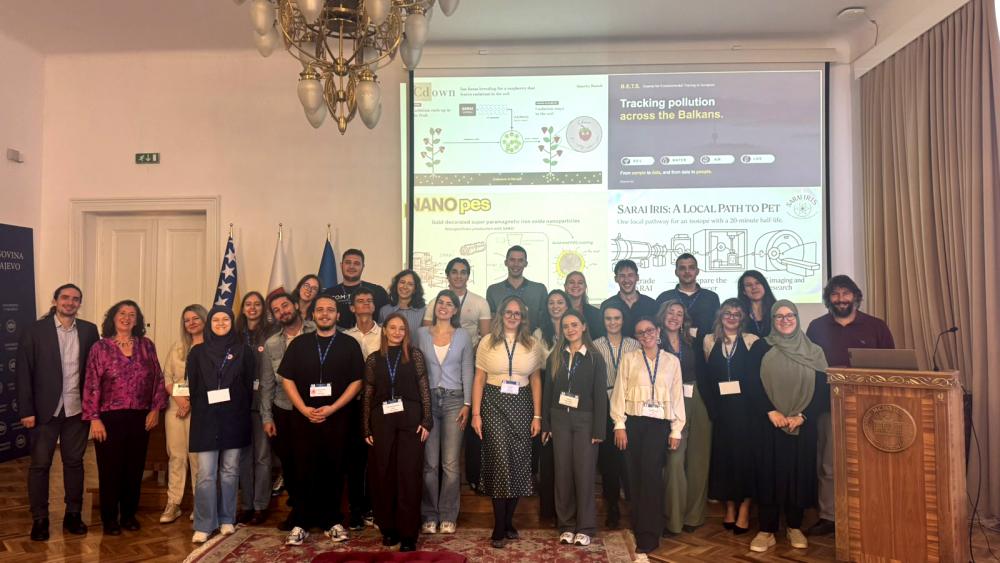


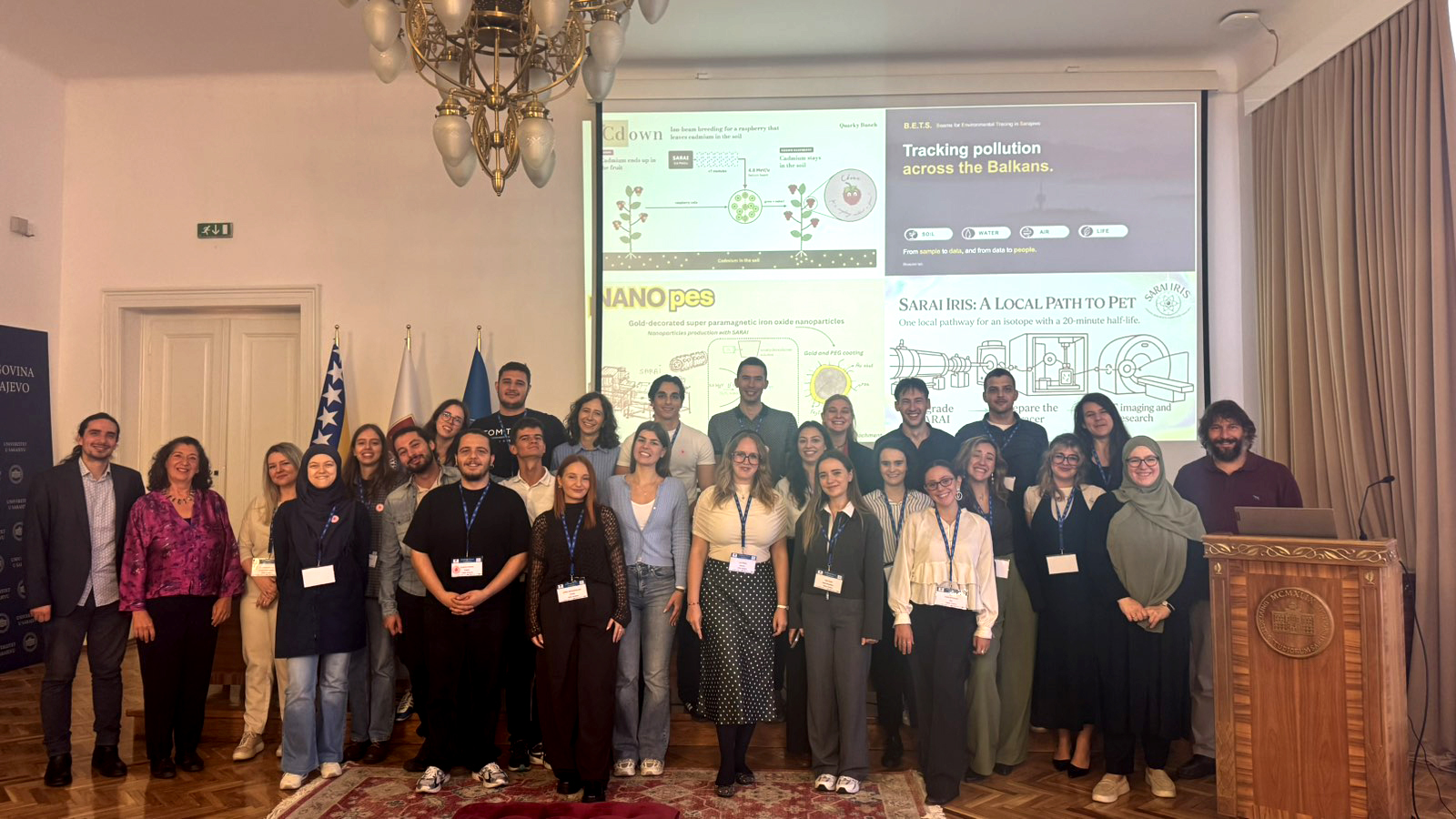
Twenty-four students from across Europe gathered at the Department of Physics, Faculty of Science, University of Sarajevo, to take on the challenge of using particle accelerators to address societal problems in the Balkans. This was a special edition of the CBI (Challenge Based Innovation) program, organized in Sarajevo from 22 September to 1 October 2026, after four years of CBI challenges being held in France near CERN.
These selected students—young physicists, engineers, chemists, and experts in the natural sciences—attended two days of expert lectures by world-leading specialists in accelerators, radiochemistry, cultural heritage protection, and other related fields. They then had seven days to develop an idea and propose a project for the innovative application of particle accelerators in the Balkans, before presenting that project to an international jury.
All four teams considered the use of a particle accelerator of the SARAI type (Sarajevo Ion Accelerator), which is expected to be transferred from CERN and installed at the Department of Physics, Faculty of Science, University of Sarajevo, in the near future.
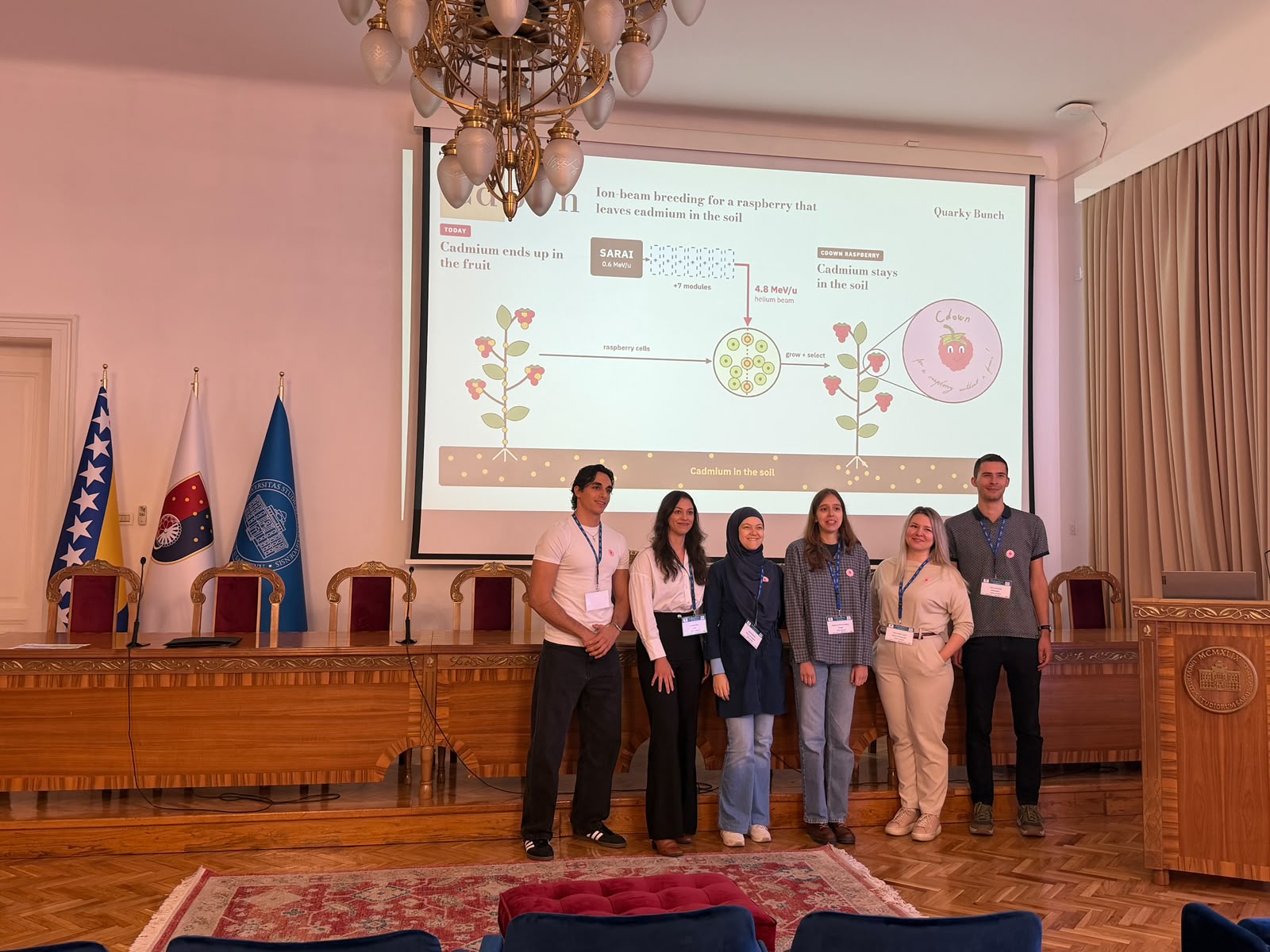
The winning project (Team Quarky Bunch) proposed using a particle accelerator to induce sustainable modifications in raspberry plants, thereby reducing the amount of harmful cadmium that raspberries accumulate from the soil in their fruit.
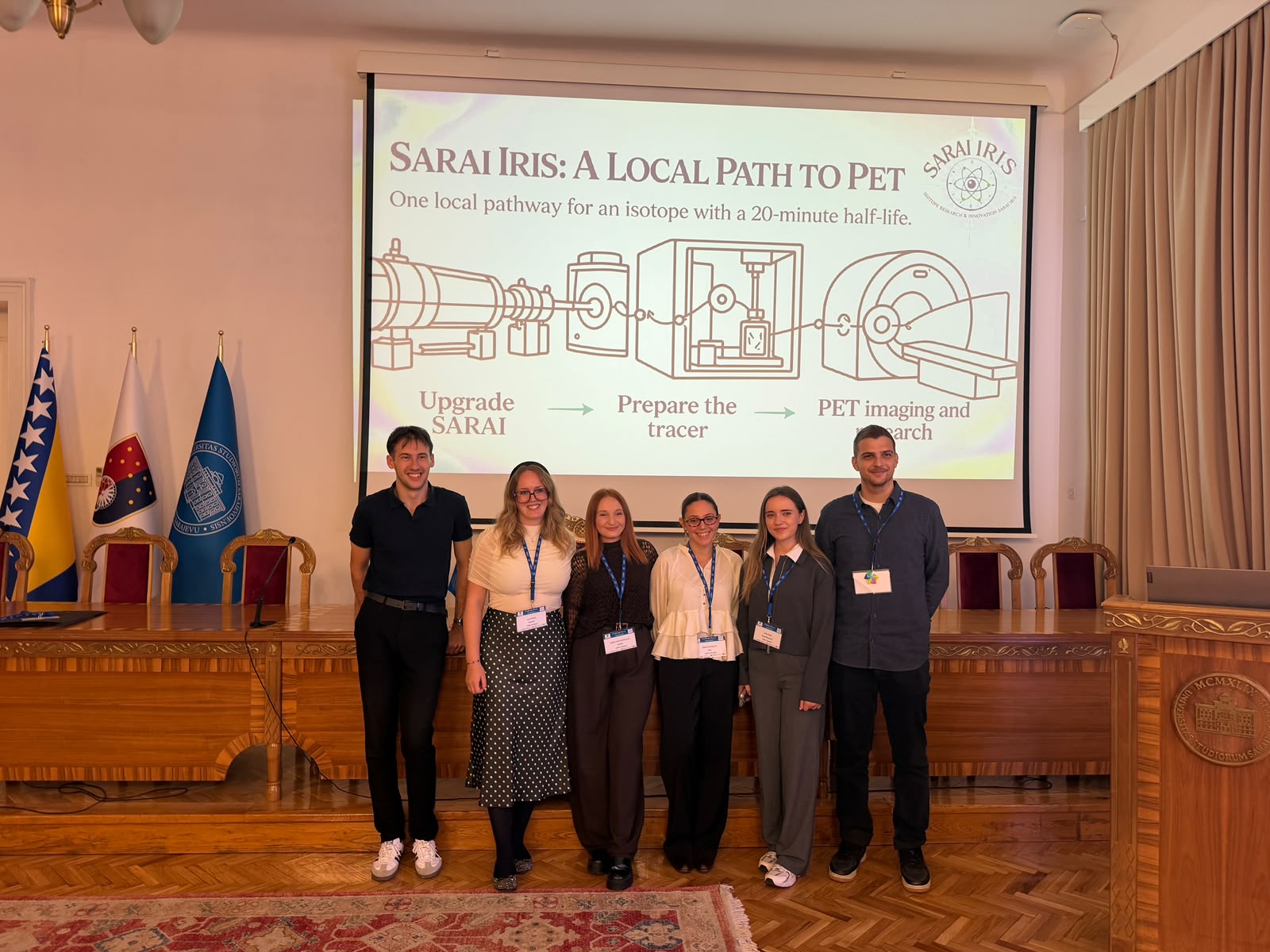
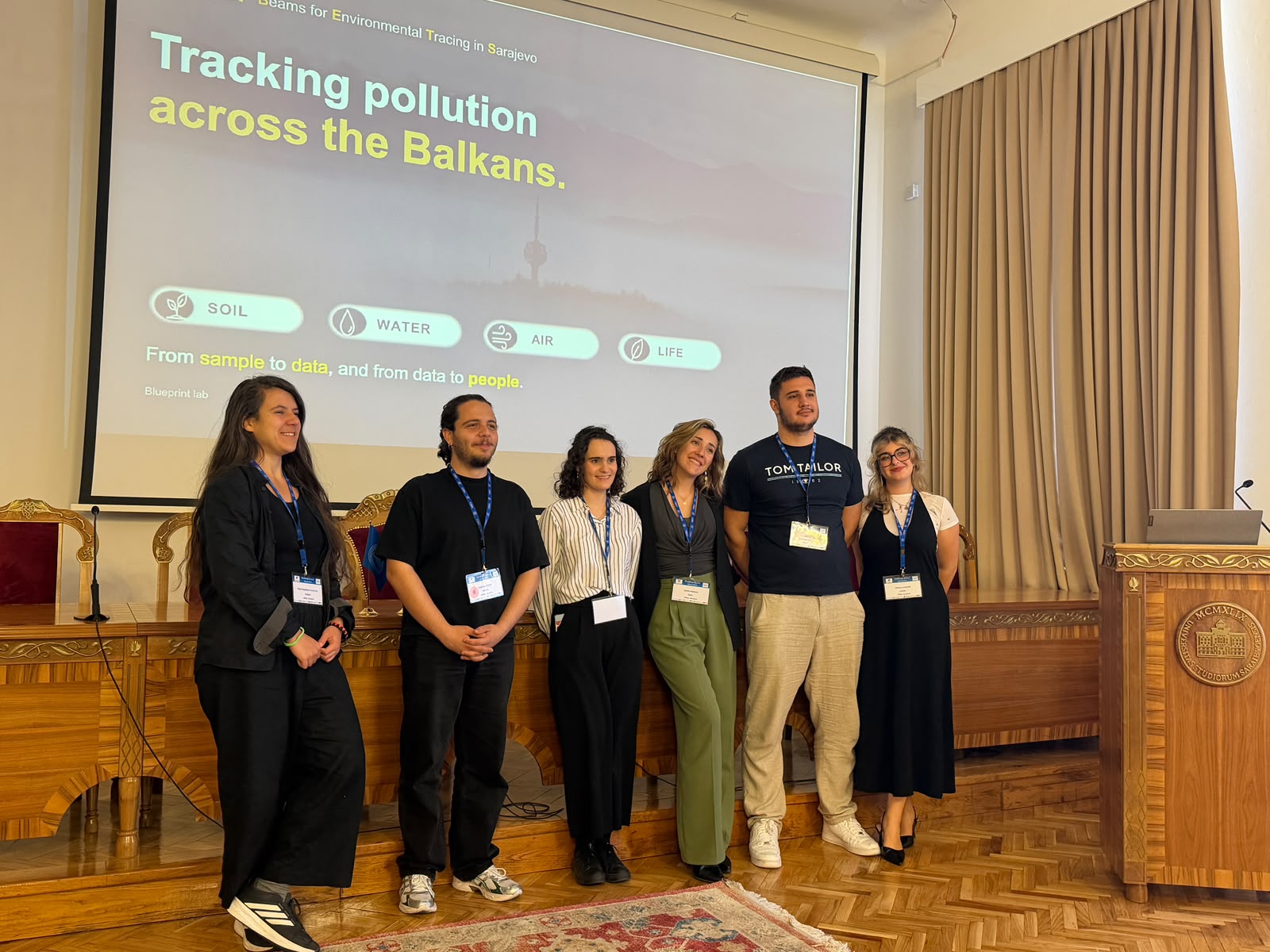
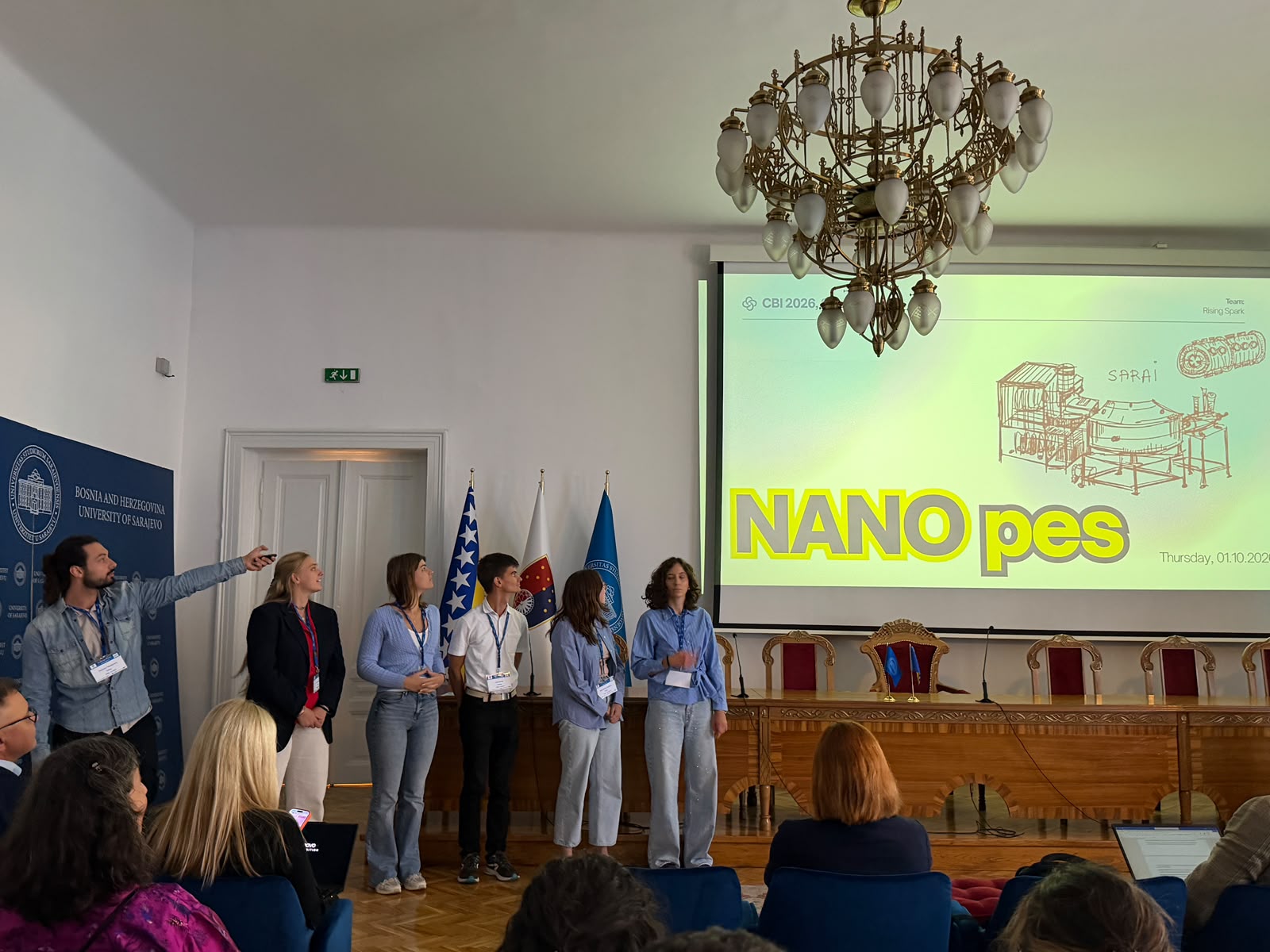
The other projects proposed applying the SARAI accelerator to create nanoparticles that would improve radiotherapy-based cancer treatment (Team Raising Spark); using this proton accelerator for the local production of radioisotopes essential for PET/CT imaging (Team BOSON); or creating an organized network for monitoring pollution and its causes with exceptional data precision (Team Blueprint Lab).
Before the winners were announced, the chair of the jury, Professor Dr. Kemal Durić, Vice-Rector for International Cooperation at the University of Sarajevo, emphasized that he was impressed by the overall quality of the projects.
Professor Dr. Maja Arslanagić-Kalajdžić added: “This year’s teams, who came from all parts of Europe, demonstrated that SARAI is more than a physical instrument. It can serve as shared infrastructure for agriculture, environmental monitoring, and medicine, as well as for the entire region.”
Toms Torims from CERN stated: “All four teams based their proposals on urgent real-life challenges facing Bosnia and Herzegovina and the Western Balkans.”
Another jury member, Alexandra Charalampopoulou from CNAO (Italy), added: “Beyond the scientific aspect, it was wonderful to see the human side of this collaboration. It was an excellent example of how cooperation between different disciplines, as well as between different cultures and experiences, can generate creative and innovative solutions.”
Professor Dr. Elvedin Hasović, Vice Dean of the Faculty of Science, University of Sarajevo, summarized the overall impressions: “The ideas presented by these young scientists deserve the opportunity to move from the page into the laboratory, and I would be proud to see some of them implemented at the SARAI facility.”
This special CBI 2026 challenge was made possible thanks to the support of the Three Physicists Foundation, the IFIGENEIA and EPITA projects, and contributions from CERN, CNAO, COSYLAB, HITRIplus, Instrumentation Technologies, IPPOG, and the University of Sarajevo, which hosted the event.
The local organization of the school was coordinated by Professor Dr. Azra Gazibegović-Busuladžić from the University of Sarajevo. The participants were mentored by Amer Ajanović from the University of Sarajevo and CERN, Yiota Foka from GSI, Maurizio Vretenar from CERN, and Nicolas Delerue from CNRS/IJCLAB and the University of Paris-Saclay.
Prepared by:
Nicolas Delerue, CNRS/IJCLAB and University of Paris-Saclay
Azra Gazibegović-Busuladžić, Department of Physics, Faculty of Science, University of Sarajevo