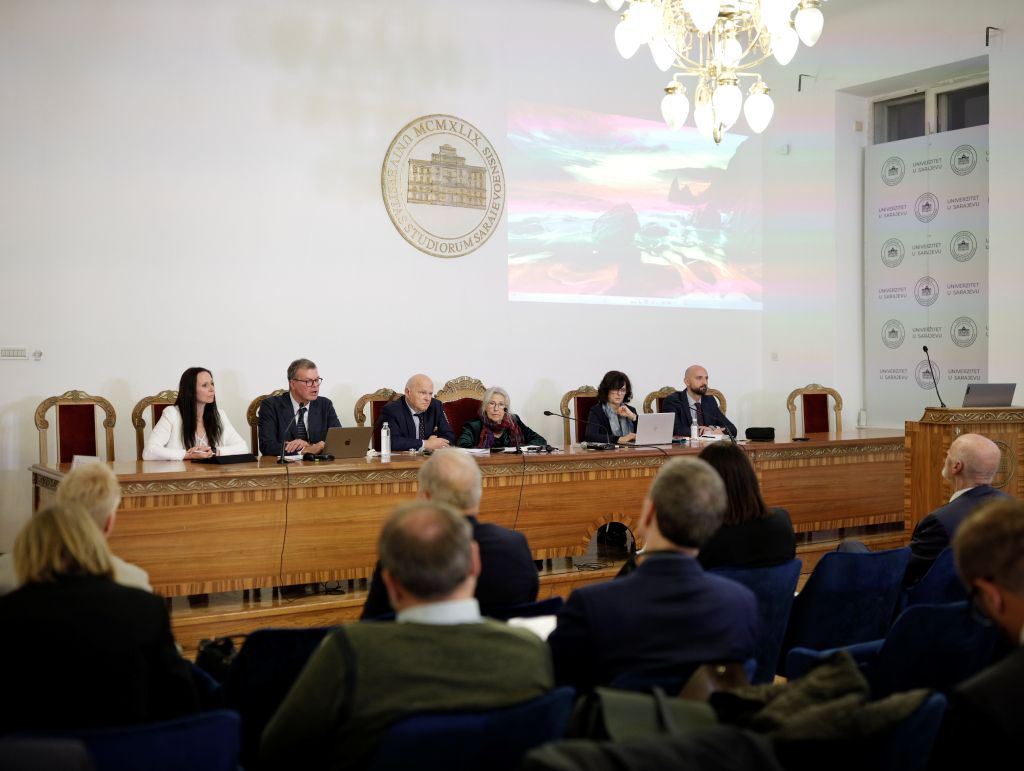
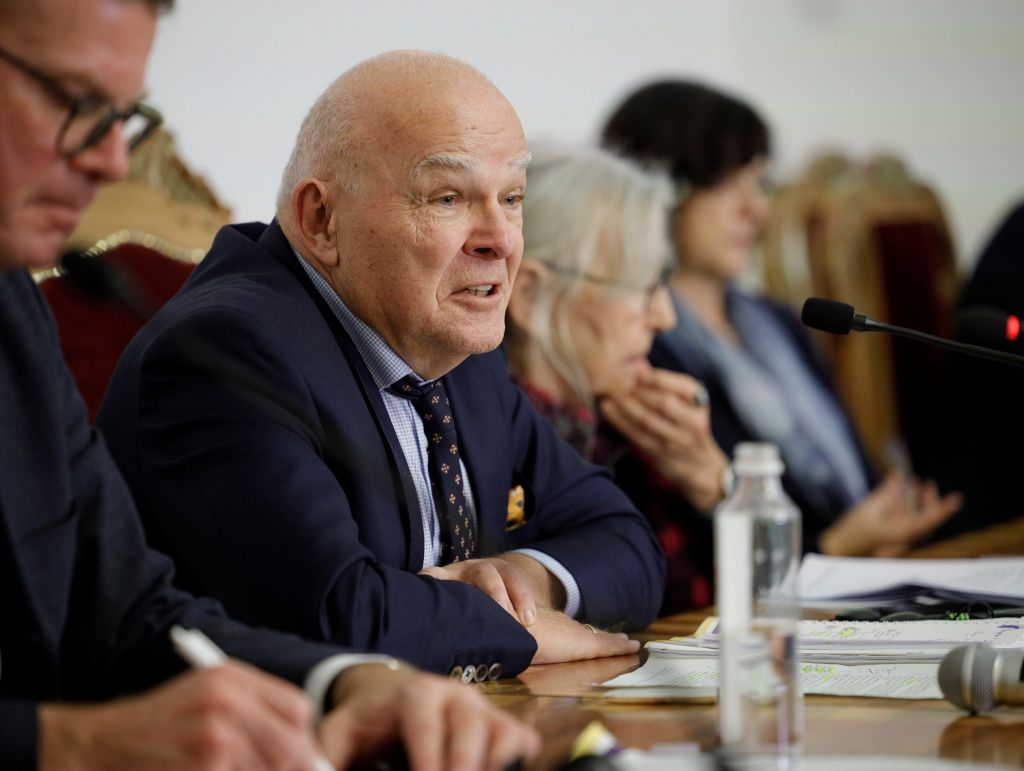
The panel on the constitutional transformation of Bosnia and Herzegovina, concluded the second day of the conference “30 Years After Dayton: Myths, Realities, and New Visions for the Future of Bosnia and Herzegovina”
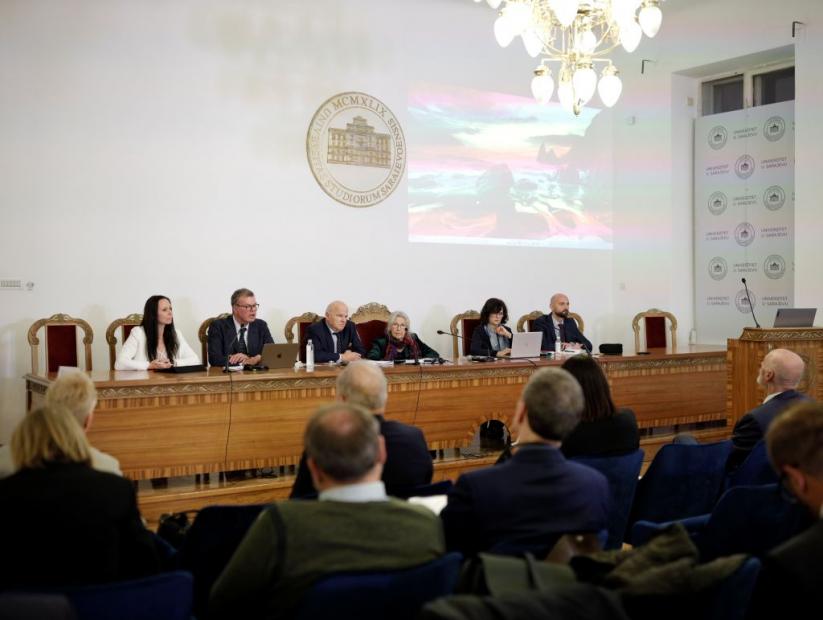


The panel on the constitutional transformation of Bosnia and Herzegovina, concluded the second day of the conference “30 Years After Dayton: Myths, Realities, and New Visions for the Future of Bosnia and Herzegovina”
IN ADDITION TO THE POLITICAL WILL FOR CONSTITUTIONAL REFORM, THERE IS A CLEAR DEFICIT OF POLITICAL RESPONSIBILITY
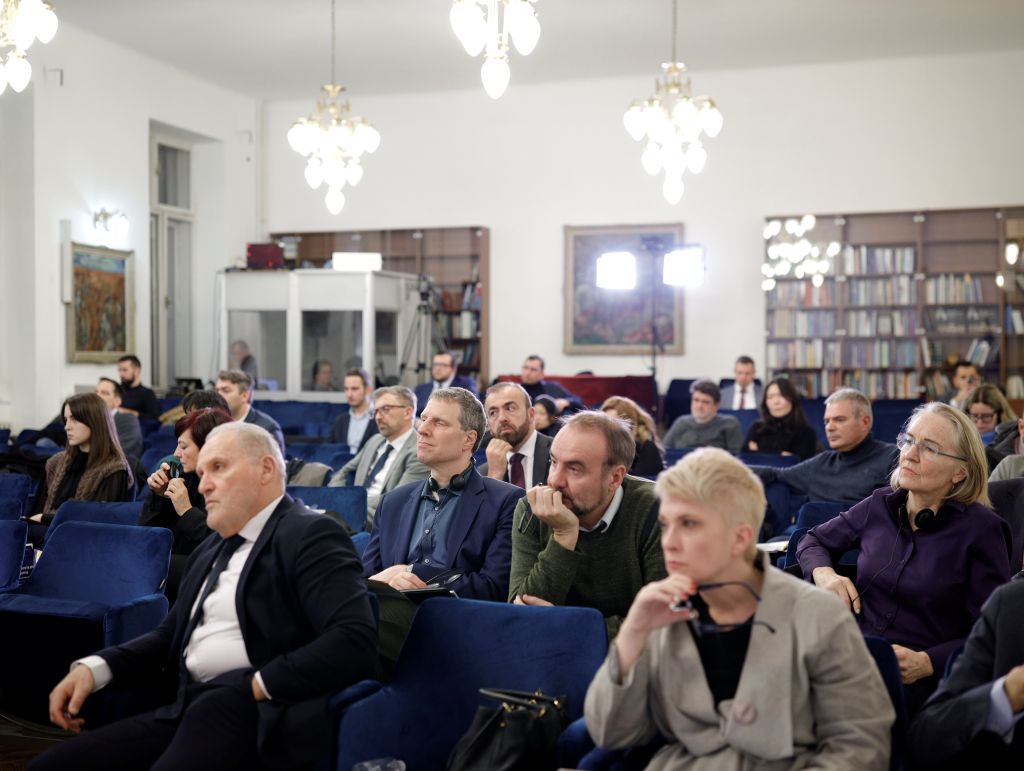
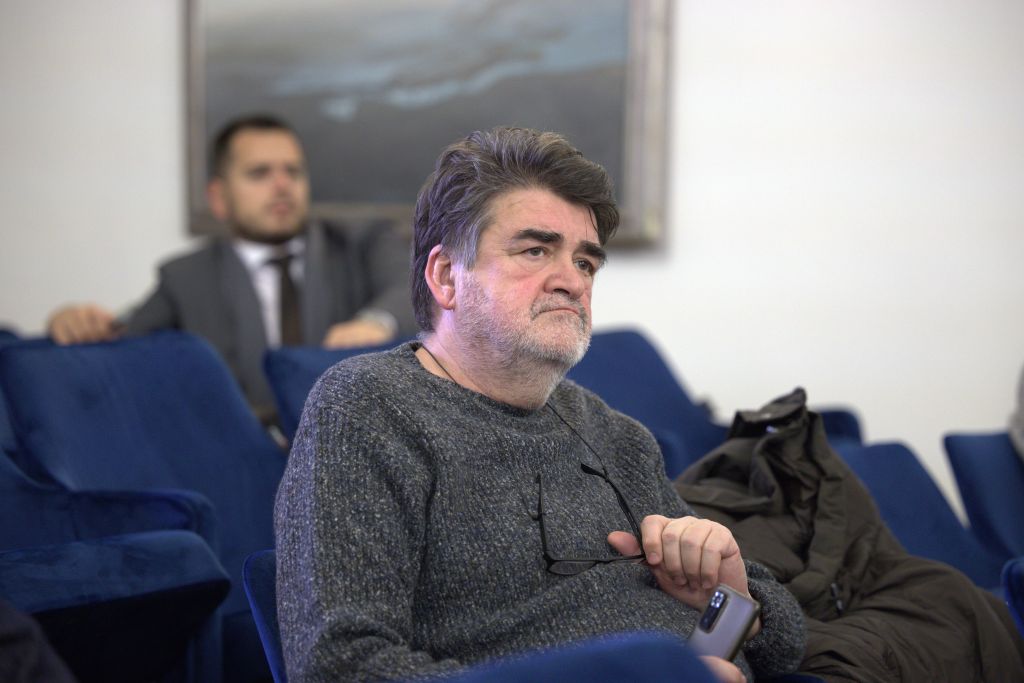
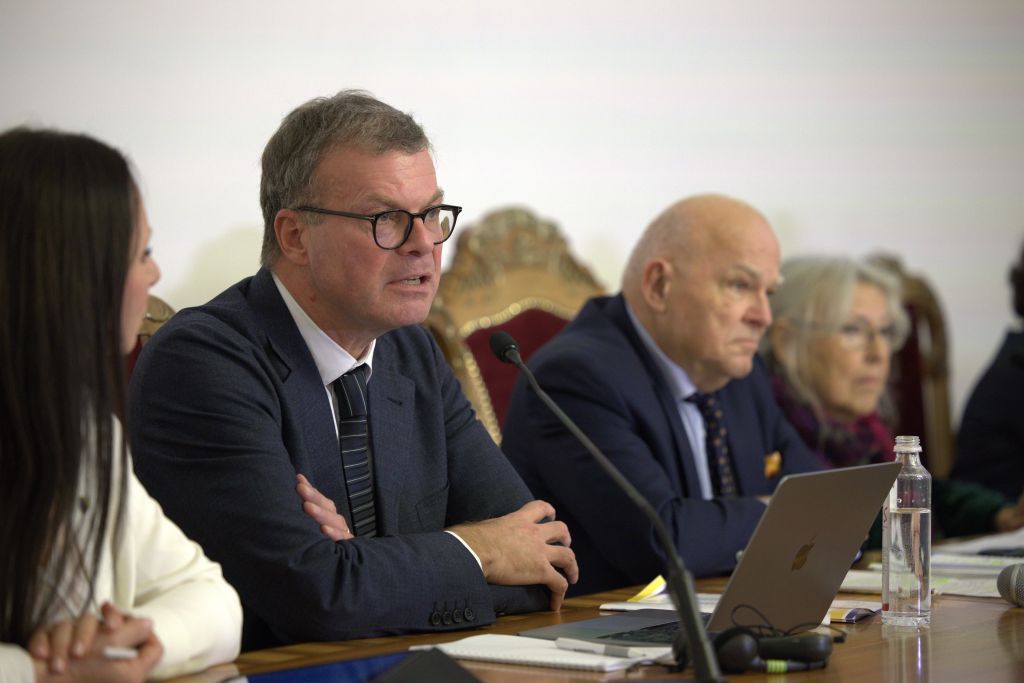
(Sarajevo, 22 November 2025) “Constitutional transformation of Bosnia and Herzegovina” was the final panel of the second day of the University of Sarajevo’s conference marking 30 years since the signing of the Dayton Peace Agreement.
Dr. Constance Grewe, Professor Emeritus at the University of Strasbourg and former Vice President of the Constitutional Court of Bosnia and Herzegovina (2009–2012), emphasized that the current consociational model of democracy in BiH prevents authorities from creating effective public policies, and from a constitutional perspective, the exclusion of others and the restriction of voting rights are highly questionable and weaken democratic processes in society.
Dr. Joseph Marko, Professor Emeritus at the University of Graz and former Vice President of the Constitutional Court of Bosnia and Herzegovina (1999–2001), reminded that one of the key problems in Bosnian society is the existence of different narratives about the past, with the current EU stance being quite problematic – “sit and watch, do your job.” “The international community persistently insists on talks with elected officials who are continuously re-elected due to the flawed voting system in BiH. Therefore, it is important to find a balance in future legal solutions between the ethnic principle on one side and the prevention of discrimination and corruption on the other,” Marko emphasized. He also expressed a wish that Austria, from where he comes, would have international judges of the Constitutional Court, as this is standard legal practice at the international level. “The departure of international judges from the Constitutional Court of BiH will be possible once the Constitution is changed,” Marko concluded.
In the discussion, Dr. Lejla Balić highlighted that Bosnia and Herzegovina, by taking on numerous international obligations and opening the EU accession process, must accept a principle where individual rights take precedence over the consociational model that protects collective rights. She pointed out that for serious reforms, the problem is not only political will but also a deficit of political responsibility, which has created chronic political apathy reflected in low voter turnout. One of her proposals was to introduce mandatory voting to strengthen political responsibility among elected officials, encouraging them to work more in the interest of all citizens, whose interest is Bosnia and Herzegovina’s membership in the EU.
Dr. Damir Kapidžić drew attention to the fact that the role of citizens is not sufficiently emphasized in these political processes and that solutions must be sought to involve them in the process of co-creating the Constitution.
The conference activities continue tomorrow (Sunday, 23 November 232025) at 11:00 with a panel discussion at the Bosniak Institute titled “Speaking of the Unspoken: Art after Srebrenica,” and on Monday, 24 November 2025, at 11:00 at the UNSA Rectorate, a study conducted in cooperation with Yale University (Yale Jackson School of Global Affairs) and the Institute for Development Impact (I4DI) titled “Building Peace Across Generations: Mapping Perspectives on Peace Systems and Reforms” will be presented. The document explores how citizens of Bosnia and Herzegovina perceive and maintain peace in their daily lives and proposes a series of practical measures to strengthen social cohesion and institutional trust.