The Connection That Opened a Window to the World: 30 Years of Academic Internet in Bosnia and Herzegovina


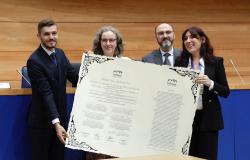
The great turning points in the history of the Internet have almost always taken place in university centers, computer labs, and rooms where a few enthusiasts believed that knowledge should have no borders. The Netherlands was the first European country to connect to the public Internet: on 17 November 1988, the research institute for mathematics and computer science CWI (Centrum Wiskunde & Informatica) in Amsterdam became the first European point connected to the public Internet.
For Bosnia and Herzegovina, such a historic moment occurred on June 28, 1996. On that day, the first videoconference between the University of Sarajevo and the Vrije Universiteit Amsterdam was organized from the premises of the University Tele-Informatics Center (UTIC) of the University of Sarajevo. The official opening of the Internet satellite connection between Amsterdam and Sarajevo took place on Friday, June 28, 1996 at 4:00 p.m., as part of the VUSUS Unilink — the “Vrije Universiteit Supports University of Sarajevo” project — via a dedicated 128 kbps satellite connection.
There is also a valuable video clip from the 1996 TVBiH News about this event, which today represents a valuable testimony to the time when Bosnia and Herzegovina, and especially Sarajevo, immediately after the war and siege, were returning to international academic and scientific trends.
*Video – TVBIH NEWS 28/6/1996: LINK
Today, 128 kbps sounds almost symbolic because it is less than the speed needed to load an average web page today. However, in 1996, for the University of Sarajevo and the academic and scientific community of Bosnia and Herzegovina, this connection was not just a technical channel. It was a communication line to the world, to scientific journals, university libraries, colleagues in Europe and the United States, to the exchange of ideas and re-engagement in international academic and research life.
The special value of this project was that it was created as a combination of knowledge, solidarity and academic enthusiasm. The link was established by volunteers in Amsterdam and Sarajevo, and financial support for the investment and operating costs over the next two years was provided by the Soros Foundation and the Dutch Ministry for Development Cooperation. The equipment in Sarajevo also provided sixteen dial-in lines that were available to citizens and organizations outside the University of Sarajevo itself.
Therefore, June 28, 1996 is not just the date of a single connection or a single technical project. It is the date when the academic community of Bosnia and Herzegovina showed that it belongs to the European and global space of knowledge. The University of Sarajevo, which suffered enormous human, material and institutional losses during the siege, continued to work and preserve the civilizational standards of higher education and science in the most difficult conditions.
The first videoconference between the University of Sarajevo and the Vrije Universiteit Amsterdam was therefore more than a demonstration of a new technology. It was a snapshot of a time: from the premises of UTIC, in a Sarajevo still recovering from the war, live audio-visual contact was established with academic partners in Amsterdam. At a time when video calls were not an everyday occurrence, that moment had a powerful message — that Sarajevo and Bosnia and Herzegovina could be heard, seen, and included again.
The pioneering efforts of 1996 quickly opened up space for new forms of digital communication, multimedia, and the international presence of Bosnia and Herzegovina on the Internet.
Thirty years later, it is important to view this event not only as a technological anniversary, but as part of a broader history of academic resilience. The Internet in Bosnia and Herzegovina did not begin as a commercial luxury, but as an academic necessity – the need for professors, students, researchers, and institutions to regain access to knowledge, communication, and international cooperation.
In this sense, UTIC holds a special place in the history of Bosnia and Herzegovina’s digital development. The premises from which the videoconference was organized on June 28, 1996, became a place where the academic connection of Bosnia and Herzegovina with the world was renewed. Here, in a practical sense, an infrastructure of trust was built: trust that the university can be the engine of renewal, that technology can serve knowledge and that international cooperation can overcome even the most difficult historical circumstances.
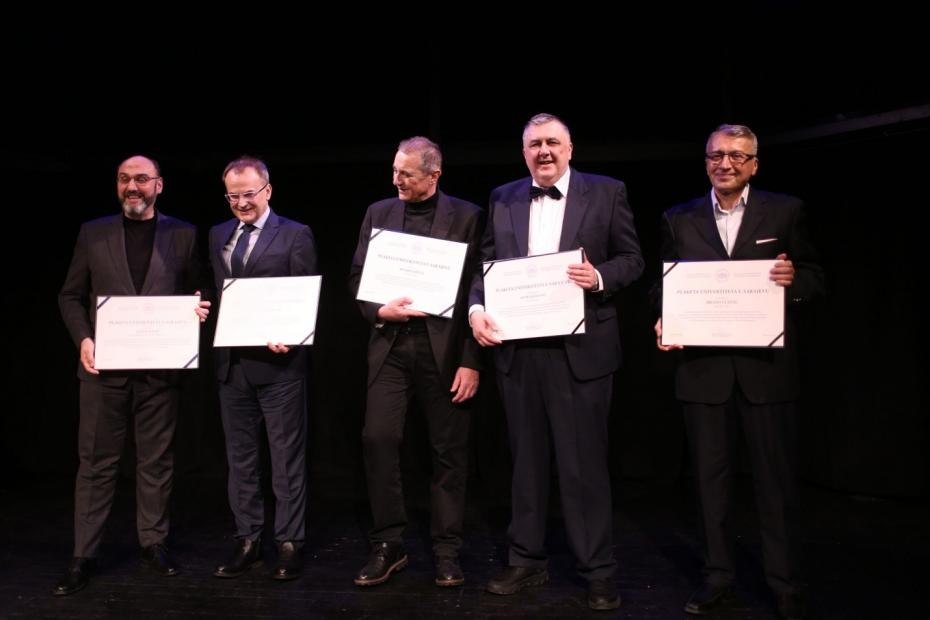
The celebration of 30 years of academic connectivity to the Internet in Bosnia and Herzegovina should therefore also be an occasion to express gratitude to the pioneers who carried out this process. Among them, a special place belongs to the people from UTIC and the University of Sarajevo, members of NetGroupe — Azur Ajanović, Haris Hadžialić, Mladen Rifelj, Brano Vujičić and Prof. Mesud Baručija — as well as partners from the Vrije Universiteit Amsterdam, especially Jacques Schuurman, donors and all those who understood that the renewal of a country begins with the renewal of its connections with knowledge.
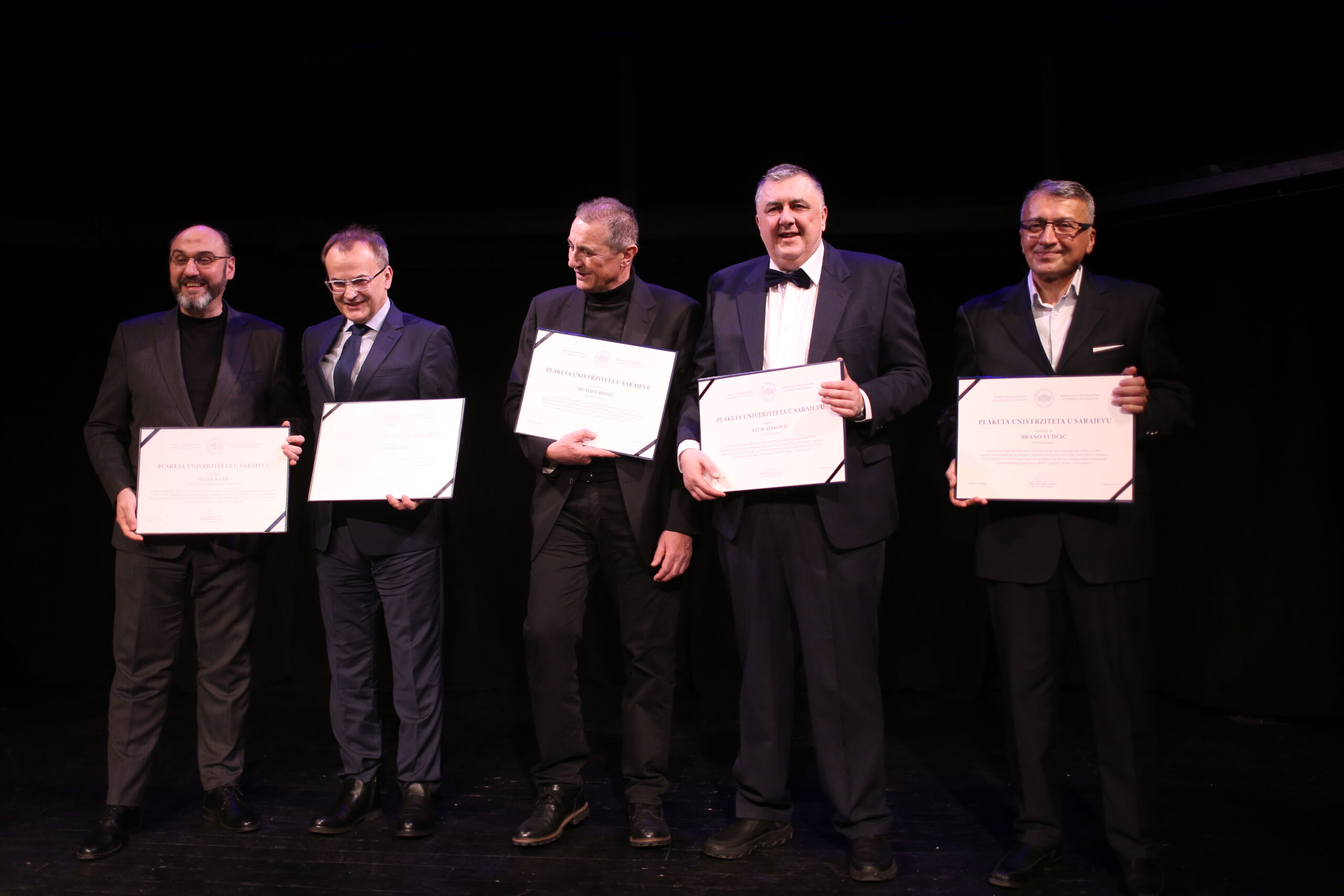
Rektor prof. dr. Tarik Zaimović i članovi NetGroupe, s lijeva na desno: Haris Hadžialić, Mladen Rifelj, Azur Ajanović i Brano Vujičić