International Scientific Conference "Srebrenica 30 Years After the Genocide:


The University of Sarajevo is organising the international scientific conference “Srebrenica 30 Years after the Genocide: Memory, Responsibility and the Challenges of Denial”, which will take place from 1 to 3 July 2025 in Sarajevo and Srebrenica.
The genocide committed against Bosniaks in Srebrenica and its surrounding area in July 1995 stands as one of the most tragic chapters in the modern history of Bosnia and Herzegovina. At least 8,372 Bosniak men and boys were killed, and the consequences of this crime continue to shape the social, political and legal context not only in Bosnia and Herzegovina, but also within the wider international community.
Commemorating the 30th anniversary of the genocide with an international scientific conference provides an opportunity to honour the victims, reaffirm the importance of truth and justice, and—through academic discourse—create space for relevant scholarly and professional debate. Despite the adoption of the United Nations resolution on the genocide in Srebrenica and domestic legal provisions that criminalise genocide denial in Bosnia and Herzegovina, denial persists at local, regional and global levels. For these reasons, the academic community must take a leading role in researching, documenting and educating about this crime, thereby ensuring lasting memorialisation and preventing the recurrence of similar atrocities.
As the oldest and most significant educational and scientific institution in Bosnia and Herzegovina, the University of Sarajevo bears a crucial responsibility for promoting research and education on genocide grounded in rigorous scholarship. Accordingly, the Conference will feature the most eminent international and Bosnian‑Herzegovinian scholars and researchers in the fields of crimes against humanity and genocide studies.
“Srebrenica, 30 Years” Exhibition of Photographs by Damir Šagolj Opened
On Monday, 30 June 2025, at the Academy of Fine Arts Gallery, the exhibition of photographs by Damir Šagolj “Srebrenica, 30 Years” was opened, as part of a series of cultural and artistic programs accompanying the conference “Srebrenica 30 Years After the Genocide: Memory, Responsibility, and Challenges of Denial.”
A portion of the exhibition is set up at the Academy and will be accessible to the public until 13 July. On Wednesday, 2 July, at Meeting Point Cinema, films by Jasmila Žbanić and Rasit Gorgulu will be screened, while on 3 July, at the Sarajevo National Theater, a concert by the Sarajevo Philharmonic Orchestra with a video essay by Danis Tanović will be held. Admission to these events is free.
“The first installation will be presented at the Sarajevo railway station, at the Square of the Victims of the Srebrenica Genocide. It consists of twelve panoramic photographs, three meters wide, taken at execution sites around Srebrenica. The second part of the exhibition will be installed in the Gallery of the Academy of Fine Arts, where about 150 photographs of various formats, taken in and around Srebrenica over the past three decades, will be displayed. Together, these images form a quiet, long meditation on violence, absence, and the act of remembrance,” explains photographer Damir Šagolj. Both exhibitions were designed and curated by Lejla Hodžić, who closely collaborated with the author to shape the visual and emotional rhythm of the project. The organizers of the exhibition are the WARM Foundation, the University of Sarajevo, and the Gallery 11/07/95.
On 2 July, at Meeting Point Cinema, starting at 19:30, a special screening of the films “Quo Vadis, Aida?” directed by Jasmila Žbanić, and the short feature “Mother” by renowned Turkish director Rasit Gorgulu will be held.
A concert by the Sarajevo Philharmonic Orchestra is scheduled for 3 July at the National Theater, starting at 20:00. This especially emotional concert will feature Gustav Mahler’s “Kindertotenlieder” (Songs on the Death of Children), a cycle of songs that powerfully and poignantly express the pain of parental loss and the fragility of human life.
The orchestra will be led by maestro Samra Gulamović, with mezzo-soprano Amila Ravkić as the soloist. During the event, a video essay directed by Danis Tanović will be presented, combining Damir Šagolj’s photographs with poetry by Faruk Šehić. The concert pays tribute not only to the children who perished in the Srebrenica genocide but also to children who died in wars and conflicts around the world.
The concert concludes the International Scientific Conference “Srebrenica 30 Years After the Genocide: Memory, Responsibility, and Challenges of Denial,” organized by the University of Sarajevo within the framework of the project “Responsibility for the Future.”
*https://www.unsa.ba/novosti/otvorena-izlozba-fotografija-damira-sagolja-srebrenica-30-godina
International Scientific Conference “Srebrenica 30 Years After the Genocide: Remembrance, Responsibility, and Challenges of Denial” Opened in the City Hall
Tonight, the conference “Srebrenica 30 Years After the Genocide – Remembrance, Responsibility, and Challenges of Denial” was officially opened in the Sarajevo City Hall. The goal of the conference is clear — the truth about the genocide in Srebrenica is a universal message belonging to all of humanity, as confirmed by the presence of around forty prominent scientists and researchers from local and international universities, from the USA, Great Britain, Rwanda, and Australia, to Bosnia and Herzegovina. The fight against denial of the genocide is not just our obligation — it is a universal struggle against hatred, which always begins with denial and ends with violence, it was emphasized tonight from the Sarajevo City Hall.
“Today, thirty years later, let Srebrenica remain a source of our strength. Because universal wisdom teaches us that tolerance is the highest form of strength — and the desire for revenge is the first sign of weakness. And our greatest strength, our greatest victory, lies precisely in our unwavering perseverance not to seek revenge, but justice. Because Srebrenica is not a defeat of the victim; it is the humiliation of the criminal. Srebrenica is not an expression of weakness but a victory of the spirit of goodness. Srebrenica cannot and will not be forgotten because life has been replaced by integrity. And as a University, on behalf of all of us who believe in education as the foundation of a fairer society, we will continue to learn, teach, research, remember, and testify,” stated Prof. Dr. Tarik Zaimović, University of Sarajevo Rector.
“I am convinced that this conference will result in relevant conclusions and scientific works that will serve as the basis for concrete actions, both within the University of Sarajevo — through educational programs, research projects, and institutional initiatives — and for politicians, decision-makers, the international community, and other relevant actors in Bosnia and Herzegovina, to work together on improving social awareness, justice, and building lasting peace in Bosnia and Herzegovina,” said Dr. Muamer Džananović, University of Sarajevo Director of the Institute for the Investigation of Crimes Against Humanity and International Law.
As part of tonight’s program, soprano Lejla Jusić performed the composition “Što te nema” (“Why Are You Not Here”) accompanied by guitarist Džanin Zeković. With this composition, Jusić opened the commemorative gathering last month marking the 30th anniversary of the genocide against Bosniaks in and around Srebrenica at St. Paul’s Cathedral in London, where, in the presence of high-ranking officials from Great Britain and Bosnia and Herzegovina, the three-decade commemoration of Europe’s largest genocide after WWII was observed.
On the second day of the conference, five panel discussions will be held at the Rectorate of the University of Sarajevo, addressing different perspectives on genocide, from legal issues, geopolitical circumstances, to denial of genocide. On the third day, a full-day visit to the “Srebrenica” Memorial Center in Potočari is planned, where participants will attend a lecture and see firsthand the environment where the genocide against Bosniaks was carried out in and around Srebrenica.
More information can be found on the official website: 30godina.unsa.ba.
Photographs: Vanja Čerimagić
Genocide denial is a geopolitical weapon
Following last night’s opening at the City Hall, today the international scientific conference “Srebrenica Thirty Years After the Genocide: Memory, Responsibility, and Challenges of Denial” continued in the premises of the University of Sarajevo’s Rectorate. The first panels discussed various aspects of genocide denial and its implications, memorialization, and international responsibility.
Henry Theriault (Worcester State University) emphasized the importance of recognizing the genocide in Srebrenica at a global level and highlighted how the international community must ensure that violence from the past does not recur in the present or future. Edina Bećirević (UNSA) pointed out that genocide denial in Bosnia and Herzegovina has never been just rhetoric or a “local” problem but an integral part of transnational authoritarian strategies. “It is quite clear that this is a broader global pattern: genocide denial is a geopolitical weapon,” stated Prof. Bećirević.
Benjamin Valentino (Dartmouth College), speaking about lessons from Srebrenica, emphasized that the world has learned that protecting large civilian populations from determined perpetrators requires readiness to pay a high price, “something that the international community still finds difficult to accept.” In the context of international responsibility, Dirk Moses (The City College of New York) noted that for Bosnian and Dutch survivors, as well as for veterans of the Dutchbat involved in the UN peacekeeping mission, one thing is very clear: the genocide in Srebrenica is part of the shared Bosnian-Dutch history. “However, thirty years later, Dutch political responsibility is absent. I believe that ‘bureaucratized racism’ is the fundamental reason for both—the failure to protect Srebrenica then and the failure to achieve a transformative acknowledgment now,” concluded Moses.
Hikmet Karčić (UNSA) offered a reflection on the UN General Assembly resolution as a symbolic and political instrument in preserving collective memory of the genocide committed in Srebrenica in July 1995. Hariz Halilovich (RMIT) addressed testimonial literature—books written by witnesses and survivors of the genocide in Srebrenica—and especially highlighted the heterogeneity and literary and historical value of this increasingly numerous literary corpus.
Norman Naimark (Stanford University) presented aspects of changes in thinking about the genocide in Srebrenica since attending the commemoration in 2005. “Compared to twenty years ago, denial of genocide is significantly more present, with increasing politicization and various forms of denial,” Naimark emphasized.
Although the International Criminal Tribunal for the former Yugoslavia (ICTY) set important legal precedents, its response to sexual violence during the war was both a historic turning point and a serious failure. As Ehlimana Memišević (UNSA) reports, despite reports of over 20,000 rapes, only 32 convictions have been issued, indicating a serious lack of legal accountability. Emil Kerenji (US Holocaust Memorial Museum) pointed out that genocidal mass killings are the culmination of a long historical process best understood through the analysis of elimination rhetoric. Analyzing past and current legal frameworks, Onur Uraz (Hacettepe University) assesses whether the international legal system has developed more effective mechanisms for addressing state responsibility for genocide or continues to face the same structural and evidentiary obstacles.
Discussing the political circumstances surrounding the adoption of the UN Resolution on the Srebrenica genocide, Rosa Aloisi & Jayden Salter (Trinity University) highlight that resistance to commemoration—including the destruction, reconstruction, and reinterpretation of memorial sites, as well as inflammatory rhetoric directed against institutionalizing remembrance—confirms the power of memorials, especially those reflecting the legal truth established before the International Criminal Tribunal for the former Yugoslavia (ICTY).
Jasmin Medić (UNSA) analyzed confessions of guilt by convicted war criminals (Erdemović, Obrenović, Nikolić, Krstić, etc.) and presented research results on the following questions: Were these confessions expressions of sincere remorse, or just a way to avoid harsher sentences? How did these confessions influence facing the past in the RS entity, and what is their significance in the fight against revisionism and genocide denial? “In my analysis, I found that the mentioned perpetrators were not genuinely remorseful for their crimes and that some reached plea agreements only to avoid being convicted of genocide,” concluded Medić.
Learning about genocide should be directed towards preventing repetition and realizing the principle of “Never Again”
Genocide denial is an organized and institutionalized phenomenon
During the continuation of the conference “Srebrenica 30 Years After the Genocide: Memory, Responsibility, and Challenges of Denial,” Kim Sadique (De Montfort University) presented her work, which problematizes the learning about genocide conceived as a transformative experience that aims to encourage students and visitors of memorial museums to take initiative and act to prevent the recurrence of such and similar crimes in the future, and to contribute to realizing the principle of “Never Again,” proposing the application of “pedagogy for social change.”
Pinar Akarcay (Istanbul University) introduced interesting concepts into the field of genocide research. “The main feature of politicides and democides is the coordinated and persistent attempt by the state or dominant social groups to, partially or fully, destroy a social or political group. The genocide in Srebrenica, almost the first genocide committed in Europe, is not only an example of genocide but also an example of politicide and democide,” emphasizes Akarcay.
In the last thirty years, numerous attempts have been made to acknowledge the political responsibility of the Netherlands regarding the Srebrenica genocide. According to Nike Wentholt (University of Humanistic Studies, Utrecht), these attempts have only partially, minimally resulted in acknowledgment. In her joint scientific article, Wentholt and Alma Mustafić argue that the Dutch policy and society did not utilize the opportunity when numerous civil court proceedings resulted in establishing the Netherlands' responsibility for the killing of over 350 Bosniaks.
“With the end of the war in Bosnia and Herzegovina, the international community incorporated into the Dayton Peace Agreement the idea that the return of Bosniaks is a human right and a form of justice, restoring property rights and displaced communities. In reality, the process of return has been – and remains even after 30 years – complex and uneven. This presentation examines the experience of returning home through two lenses: ‘domicide’ as a description of the damage caused during the war, on one hand, and ‘restoration of belonging’ as an idealized goal of the post-war period, on the other,” stated David Simon (Yale University).
At the end of the day, Sead Turčalo (UNSA) pointed out that denying the genocide in Srebrenica is not a spontaneous phenomenon or legitimate “second opinion,” but an organized and institutionalized phenomenon. Through systematic denial of legally established facts, victims and survivors are deprived of the right to truth and dignity, subjected to further humiliation, and the possibility of justice is undermined. “Revisionist narratives about Srebrenica employ recognizable methods of deception and manipulation – a complete inversion of facts, where victims are declared perpetrators, and the crime is portrayed as supposed ‘revenge’. A key tactic is the constant discrediting of sources of truth, from survivor testimonies and victim associations to the Hague Tribunal, which is falsely labeled as a ‘political court,’ all aimed at destroying trust in evidence and facts,” concluded Turčalo.
Tonight (2 July ), at Meeting Point Cinema at 19:30, a special screening of the films “Quo Vadis, Aida?” directed by Jasmila Žbanić, and the short feature “Mother” by renowned Turkish director Rasit Gorgulu will be organized.
Tomorrow (Thursday, 3 July), after the planned visit to the Srebrenica Memorial Center in Potočari, the conference will be closed with a concert by the Sarajevo Philharmonic Orchestra at the National Theatre starting at 20:00, which is open to the public. This especially emotional concert will feature Gustav Mahler’s “Kindertotenlieder” (Songs of the Death of Children), a cycle of songs that powerfully and poignantly express the pain of parental loss and the fragility of human life. The orchestra will be conducted by maestro Samra Gulamović, with mezzo-soprano Amila Ravkić as the soloist. During the event, a video essay directed by Danis Tanović, combining Damir Šagolj’s photographs with poetry by Faruk Šehić, will be presented. The concert pays tribute not only to children who perished in the Srebrenica genocide but also to children who died in wars and conflicts worldwide.
All events are a part of the University of Sarajevo’s program titled “Responsibility for the Future.”
Conference “Srebrenica 30 Years After the Genocide: Memory, Responsibility, and Challenges of Denial” Closed
LAST NIGHT’S CONCERT BY THE SARAJEVO PHILHARMONIC ORCHESTRA DEDICATED TO CHILDREN KILLED IN WARS
Participants visited the Srebrenica Memorial Center in Potočari and sites of suffering during the day
With a concert by the Sarajevo Philharmonic Orchestra at the National Theatre, featuring Gustav Mahler’s “Kindertotenlieder” (Songs of the Dead Children), the three-day international scientific conference of the University of Sarajevo — “Srebrenica 30 Years After the Genocide: Memory, Responsibility, and Challenges of Denial” — was officially closed. The piece performed represents a cycle of songs that powerfully and movingly express the pain of parental loss and the fragility of human life. The orchestra was led by maestro Samra Gulamović, with mezzo-soprano Amila Ravkić as the soloist. During the concert, a video essay directed by Danis Tanović was also presented, combining photographs by Damir Šagolj with poetry by Faruk Šehić. The concert paid tribute not only to children who perished in the Srebrenica genocide but also to children who died in wars and conflicts worldwide.
During the conference day, participants visited the Srebrenica Memorial Center and all the execution sites along the route to Potočari. Over 40 prominent scientists and researchers from 20 universities around the world had the opportunity to see firsthand the material evidence, objects, and areas where the genocide against Bosniaks in Srebrenica and its surroundings was carried out.
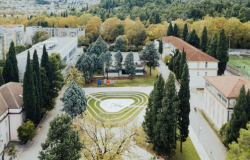
The tour began with a visit to the football field in Nova Kasaba, where over 1,300 men were captured, detained, and deported to a warehouse in Kravica, where they were ultimately murdered in the most brutal ways. Dr. Sc. Hikmet Karčić, a researcher at the Institute for the Investigation of Crimes Against Humanity and International Law at UNSA, provided an educational tour explaining the details of the persecution and suffering at these sites. Afterwards, a brief lecture was held at the Srebrenica Memorial Center, where director Dr. Emir Suljagić explained in detail the history of the memorial and what it represents as a monument of remembrance for the largest genocide in the world after World War II. The film “One Week in July” was also shown. Following the visit to the center, participants paid their respects to the victims of the Srebrenica genocide at the cemetery in Potočari.
“With this visit, we concluded this year's conference, aiming for these eminent scientists and professors from around the world to see firsthand how the organization, execution, and ultimately the attempt to conceal the genocide against Bosniaks in Srebrenica and nearby areas looked. This visit is extremely important because they will later share their experiences from Potočari through lectures and scientific papers with students worldwide, so that the truth is never forgotten,” emphasized Dr. Muamer Džananović, director of the Institute for the Investigation of Crimes Against Humanity and International Law at the University of Sarajevo.
The conference is part of a series of scientific and cultural-artistic programs called “Responsibility for the Future,” organized by the University of Sarajevo throughout the year to mark important dates in the history of Bosnia and Herzegovina — thirty years since the Srebrenica genocide and thirty years since the signing of the Dayton Peace Agreement.
Više na zvaničnoj stranici Konferencije 30godina.unsa.ba.