Sixth in a series of exhibitions "From Waste to Value" opened
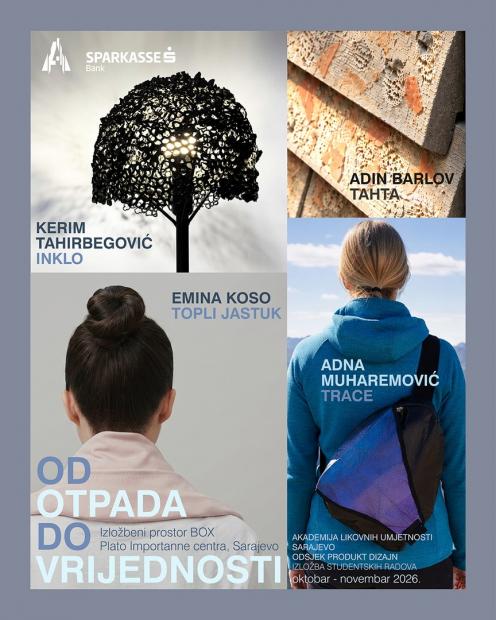


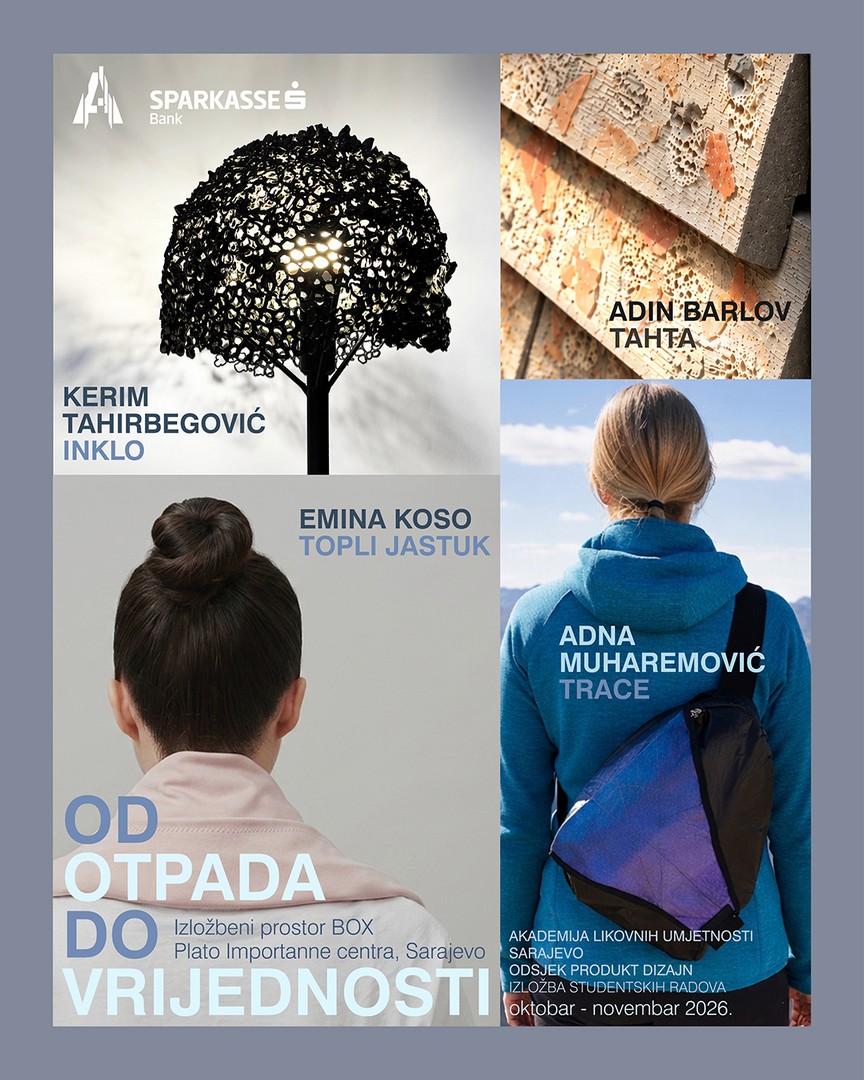
In the "Box" exhibition space on the plaza of the Importanne Center Sarajevo, student works by Kerim Tahirbegović, Adin Barlov, Emina Koso and Adna Muharemović were presented, created in the courses Materials and Processes and Technologies of Sustainable Design, under the mentorship of Asst. Prof. Denisa Šečerbajtarević, MA.
The exhibition will be on display from October to November 2026.
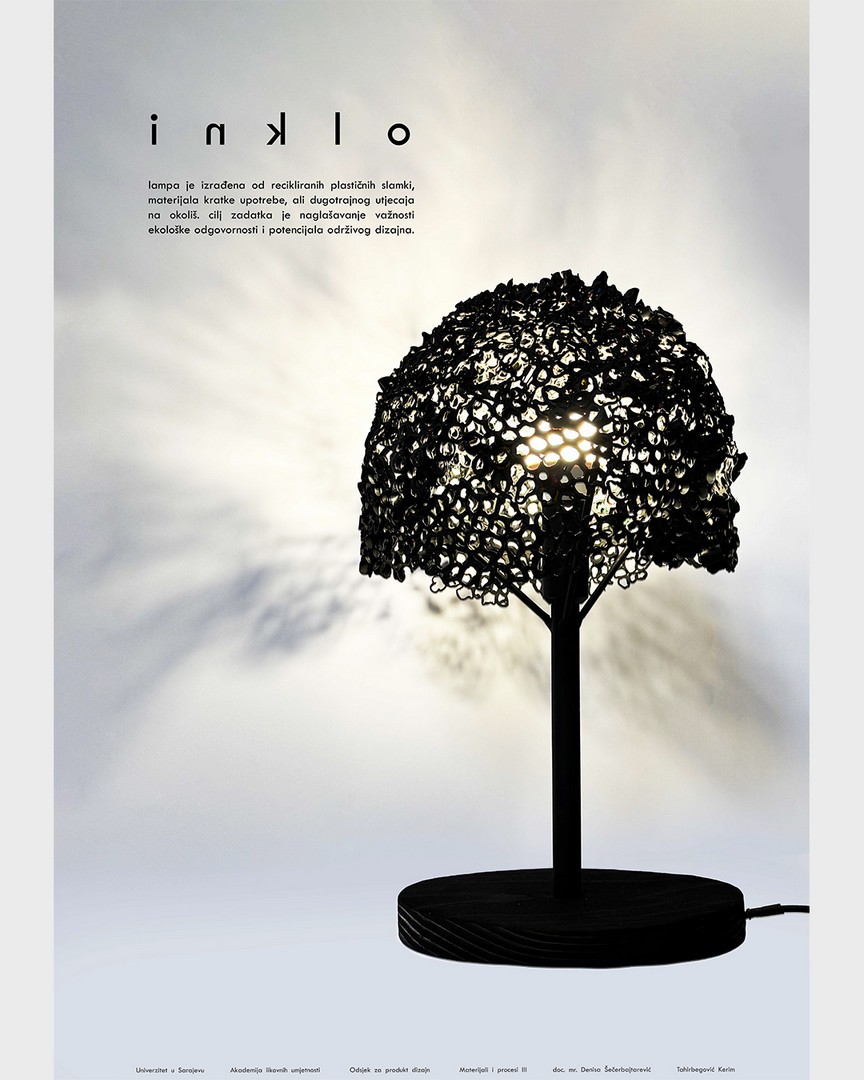
DESCRIPTION OF PROJECTS: Kerim Tahirović, "INKLO," lamp, semester project, 2nd year; mentor: Asst. Prof. Denisa Šečerbajtarević. Plastic straws pose a significant environmental problem. Their useful life is mostly limited to a few minutes, after which they remain in nature for hundreds of years. Because of their small size, they easily reach river flows where they become very dangerous food for wildlife. In addition to that fact, plastic straws are difficult to recycle due to their thin structure and often end up in nature without the possibility of reaching the recycling process. INKLO explores the possibilities of upcycling through experimentation with the material, turning everyday plastic waste into a usable object. In this way, discarded plastic is transformed into a material with new added value.
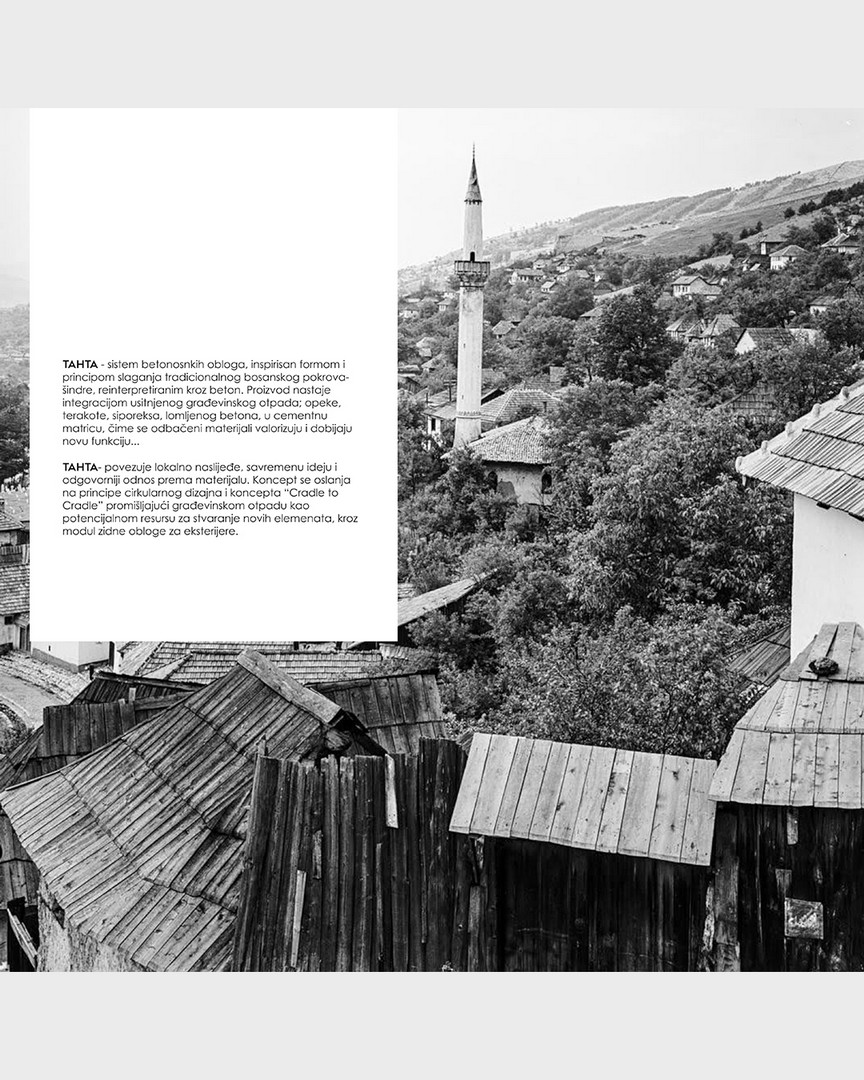
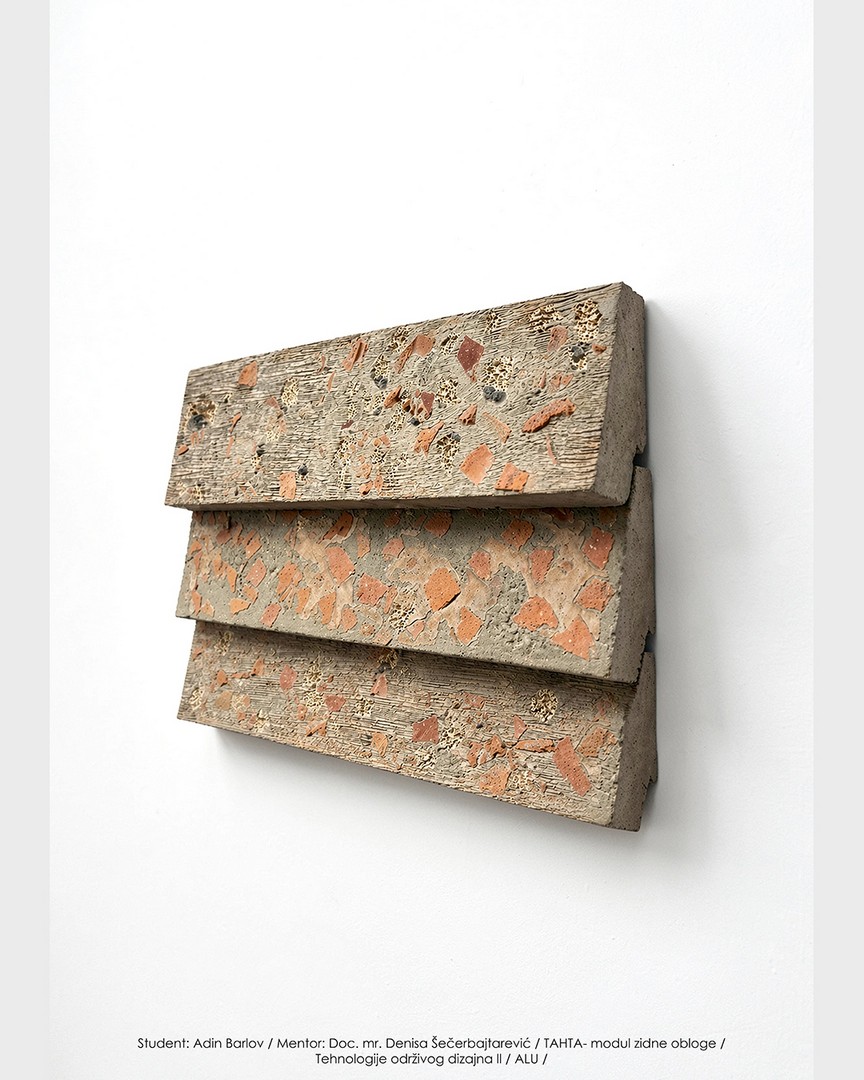
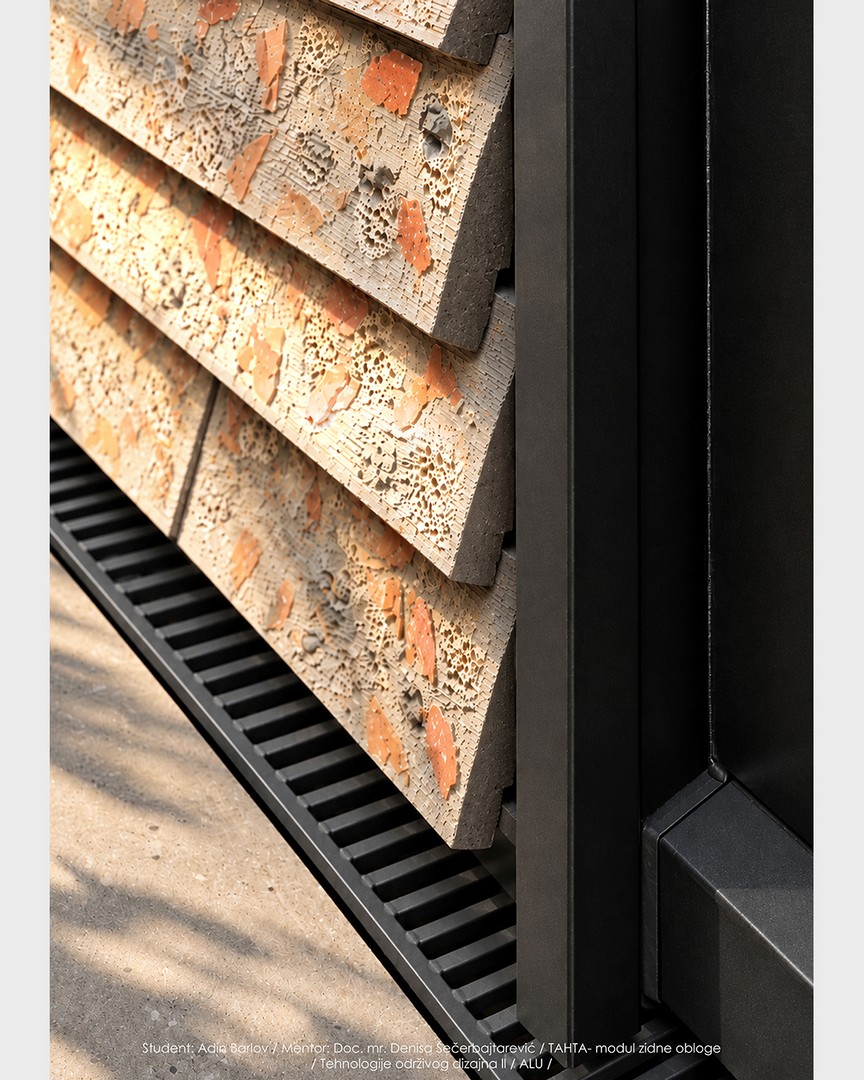
Adin Barlov, "TAHTA" – wall cladding made from recycled construction waste, semester project, 3rd year; mentor: Asst. Prof. Denisa Šečerbajtarević. TAHTA – a system of concrete claddings, inspired by the form and laying principle of the traditional Bosnian roof covering – shingles, reinterpreted through concrete. The product is created by integrating crushed construction waste; brick, terracotta, aerated concrete, broken concrete, into a cement matrix, whereby discarded materials are valorized and given a new function. The characteristic geometry of the modules enables their repetition and overlapping, forming a relief facade surface of pronounced rhythm, depth and material contrast. The standardized shape and the possibility of production in molds provide a basis for developing a serial production process. The concept relies on the principles of circular design and the Cradle to Cradle concept, considering construction waste as a potential resource for creating new products.
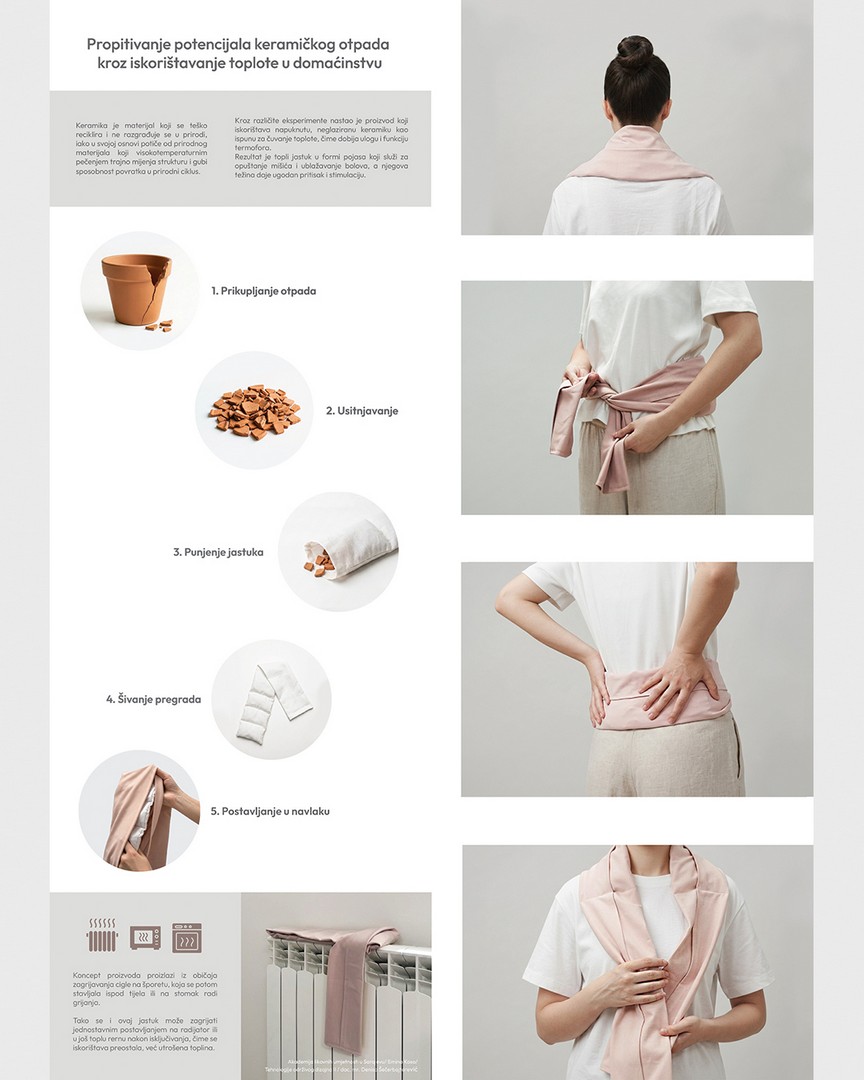
Emina Koso, "WARM PILLOW" – ceramic recycling, semester project, 2nd year; mentor: Asst. Prof. Denisa Šečerbajtarević. Ceramics is a material that is difficult to recycle and does not decompose in nature, although it originally comes from a natural material that, through high-temperature firing, permanently changes its structure and loses the ability to return to the natural cycle. Through various experiments, a product was created that uses intact, unglazed ceramics as a filler for heat retention, thereby gaining the role and function of a hot water bottle. The result is a warm pillow in the form of a belt that serves to relax muscles and relieve pain, and its weight provides pleasant pressure and stimulation. The product concept stems from the custom of heating a brick on the stove, which was then placed under the body or on the stomach for warmth. Thus, this pillow can also be heated simply by placing it on a radiator or in an oven that is still warm after being switched off, thereby utilizing the residual, already consumed heat.
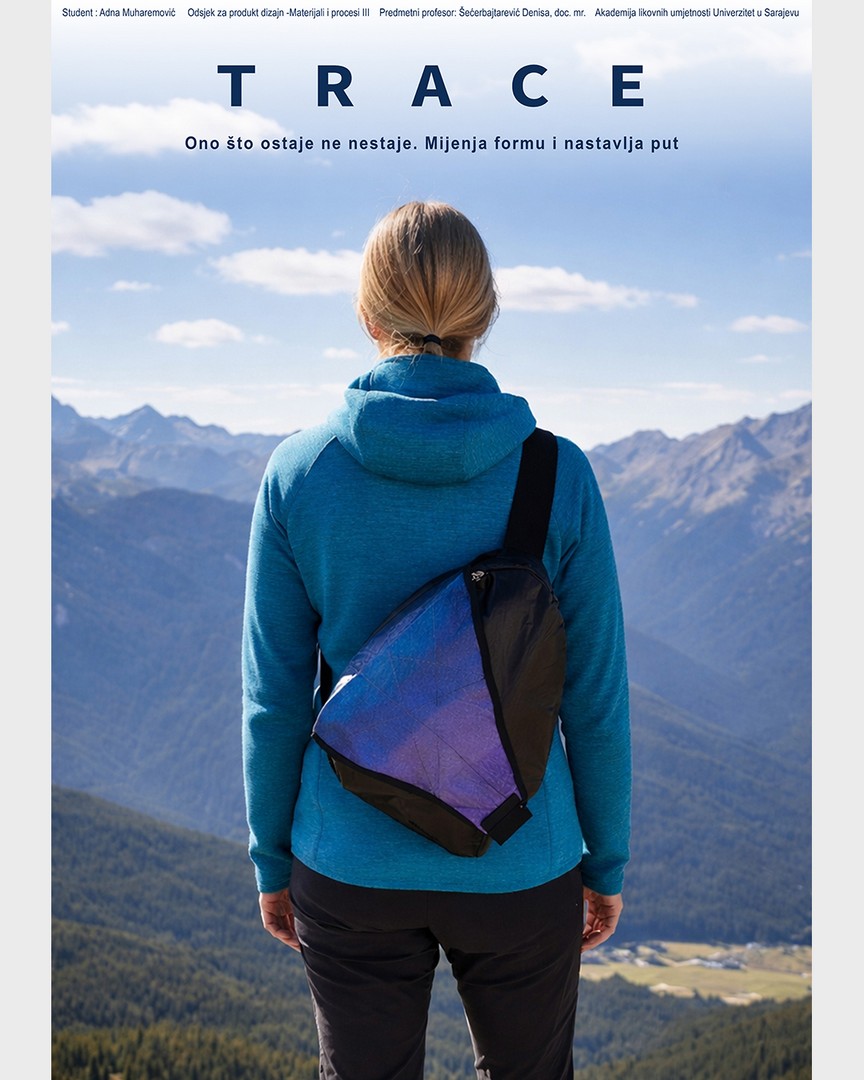
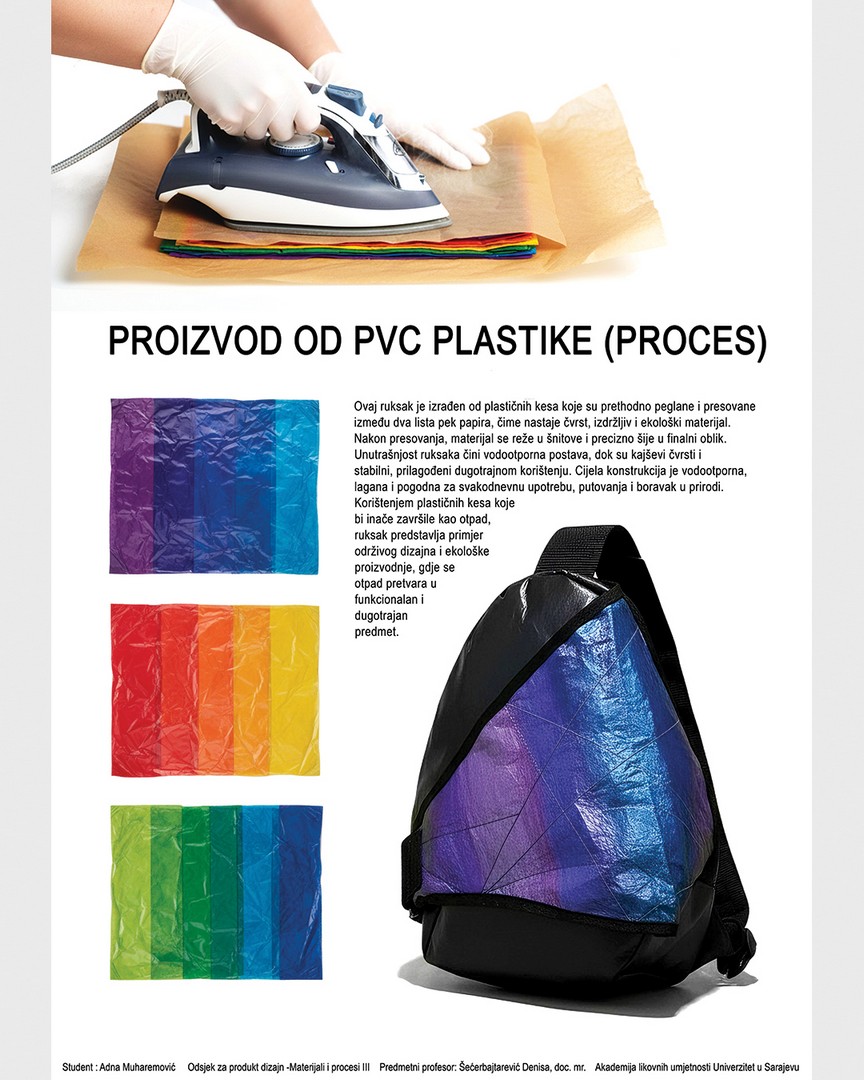
Adna Muharemović, "TRACE" – waterproof backpack, semester project; mentor: Asst. Prof. Denisa Šečerbajtarević. The process of making a waterproof hiking backpack began with research into the physical and mechanical characteristics and potential of plastic trash bags as an alternative material. After a series of analyses and experiments on waste material, the project resulted in a new flexible material suitable for further processing and sewing. The exhibition is the result of cooperation between the Academy of Fine Arts Sarajevo and Sparkasse Bank, where young designers have the opportunity, through the project "From Waste to Value" during 2026, to present to the public works created from discarded materials. The works presented at this exhibition were created within the teaching process at the Department of Product Design at ALU UNSA. The project is linked to the mission of the ReuseChain.ba platform created by the Mozaik Foundation with the support of Sparkasse Bank.