Every kilometer has its price: students of the Faculty of Traffic and Communications of UNSA explore the challenges of international road transport at UNIT GROUP
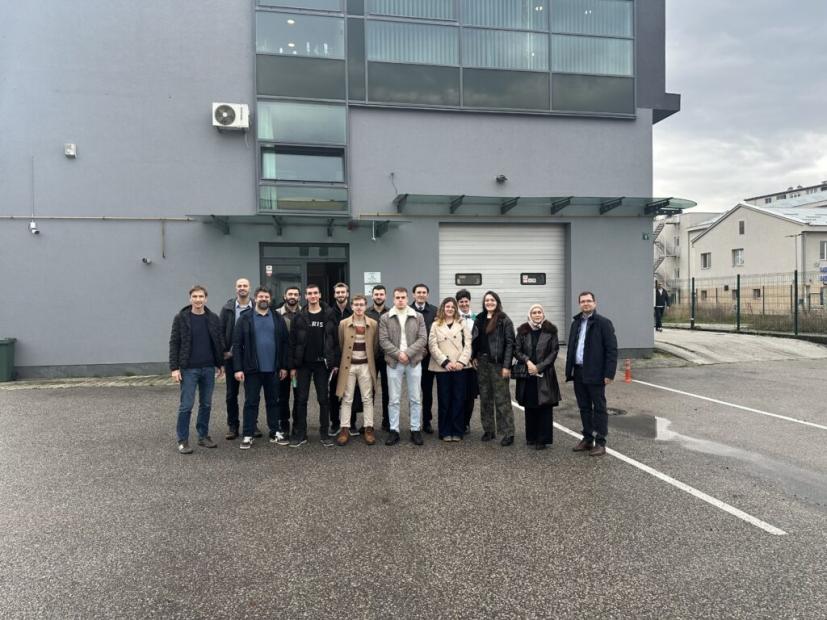


How is international transport organized, what influences its price, and how much can one unplanned delay disrupt the supply chain? Our students had the opportunity to get answers to these questions first-hand, during a professional visit to the company UNIT GROUP, where they connected theoretical knowledge of road transport and freight forwarding with real business processes.
The visit was carried out within the student challenge Supply Chain Challenge 2030 – AS IS / TO BE, which GS1 Bosnia and Herzegovina and the Faculty of Traffic and Communications of the University of Sarajevo are carrying out jointly on the occasion of Logistics Day 2026.
Through this project, students have the opportunity to leave the classroom, visit companies involved in various stages of the supply chain, talk with experts from practice and explore how today's logistics processes can be improved by 2030.
Thanks to the openness and expertise of the representatives of UNIT GROUP, our students learned about the daily operations of a transport company – from receiving a customer request and planning transport to organizing vehicles, preparing documentation and delivering goods.
International transport – much more than route planning
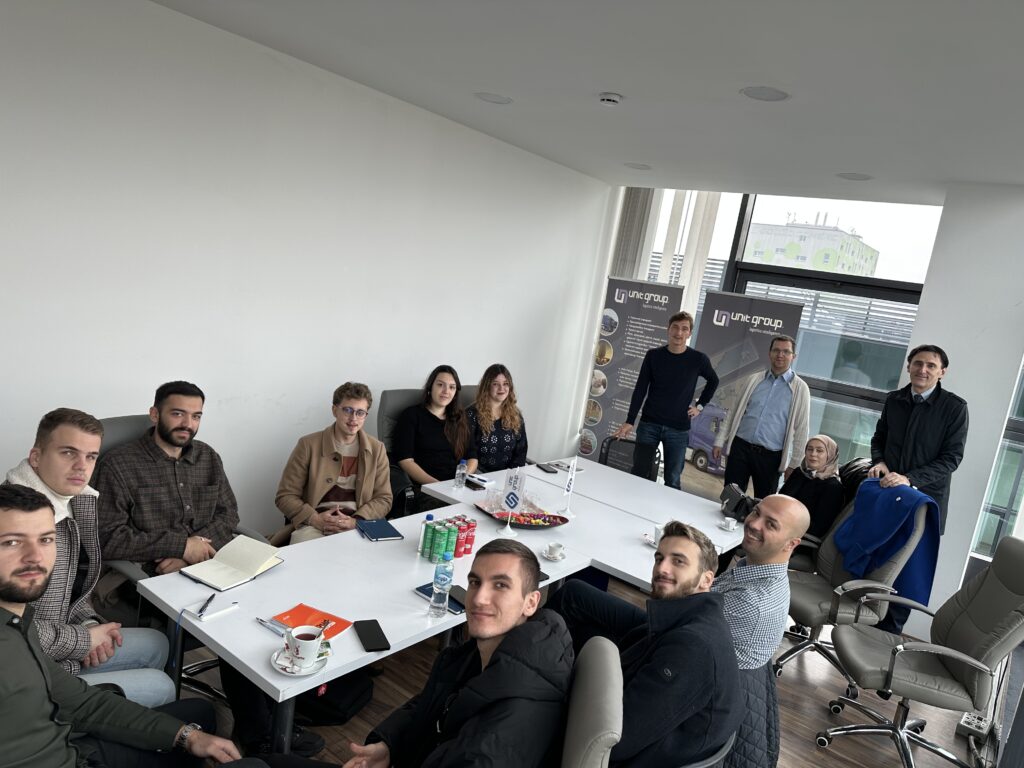
During the visit, students had the opportunity to see how complex the organization of international road transport is and how many different factors influence the successful completion of a delivery.
The representatives of UNIT GROUP explained to them the role of the freight forwarder, the importance of planning transport routes, vehicle and driver schedules, international bilateral agreements, transport permits and the documentation that accompanies international shipments.
Particular attention was drawn to the topic of pricing transport services. Through practical examples, students were able to understand how fuel, tolls, driver costs, capacity utilization, return trips, but also unforeseen delays affect the price of transport.
It was precisely such conversations that showed how important it is to supplement theoretical knowledge with experience from practice. Because in transport, it is not only decisive how many kilometers a vehicle travels, but also how much time it spends waiting, how much of its capacity is used and how successfully subsequent deliveries can be organized.
What when transport does not go according to plan?
One of the most interesting parts of the visit were conversations about the challenges transport companies face daily.
What happens when a truck waits for hours at a border crossing? How is transport organized when goods are not ready for loading? What to do when a schedule changes, and how can one delay affect subsequent deliveries?
Through concrete examples from business operations, students had the opportunity to understand how important timely planning, quality communication, experience and the ability to make quick decisions are for the successful organization of transport.
There was also discussion of possibilities for improving existing processes through better organization, digitalization and more efficient cooperation between manufacturers, freight forwarders, carriers, warehouses and customers.
The importance of high-quality and reliable data, its standardization and efficient exchange between different supply chain participants was particularly highlighted.
In this context, GS1 standards, which enable the unique identification of products, logistics units and locations, represent an important tool for improving traceability, coordination and information exchange in modern logistics systems.
From textbook knowledge to real business challenges
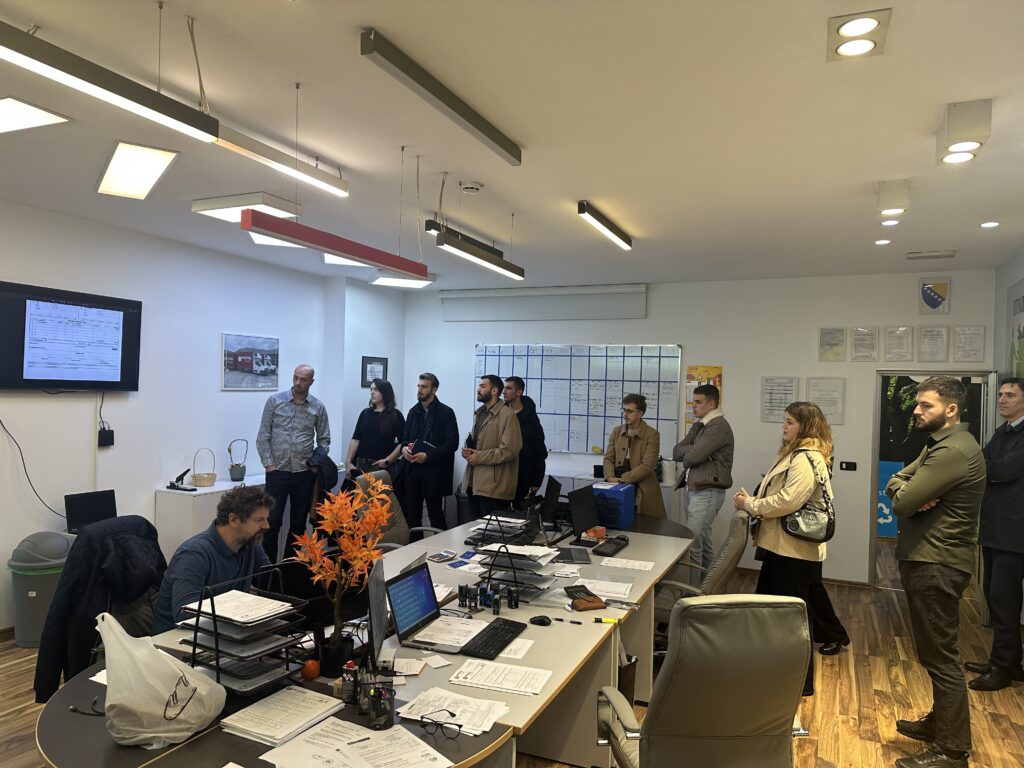
For our students, this visit represents much more than getting to know the work of one company.
It is an opportunity to recognize knowledge acquired during their studies in real business processes, ask questions, analyze challenges and develop their own ideas for solving them.
That is precisely what the concept of the student challenge Supply Chain Challenge 2030 – AS IS / TO BE is based on.
Through company visits, students learn about different links in the supply chain and analyze how they function today (AS IS), and then explore how existing processes could be improved by 2030 (TO BE).
Their task is not only to identify problems, but also to reason with arguments about possible solutions, taking into account organizational, technological and economic, but also regulatory challenges.
In this way, they develop analytical thinking, the ability to connect different business processes, teamwork and the skills of presenting their proposals with arguments.
Supply Chain Challenge 2030 – knowledge, creativity and arguments
Students will use the experience gained in preparing the final debate to be held on 17 December 2026, when they will present and defend their proposals for the future of logistics before an expert committee.
Through the two approaches, AS IS and TO BE, students will show how well they understand today's business processes, but also how ready they are to think critically about the changes brought by digitalization, new technologies, standardization and the development of modern supply chains.
GS1 Bosnia and Herzegovina, as the Faculty's partner in implementing this project, is providing a prize in the amount of 5,000 BAM.
In addition to the competitive part, the particular value of the project lies in the opportunity for students to become directly acquainted with the business environment, make contacts with experts from industry and gain experience that will serve them in their future professional development.
Gratitude to UNIT GROUP for supporting the education of young people
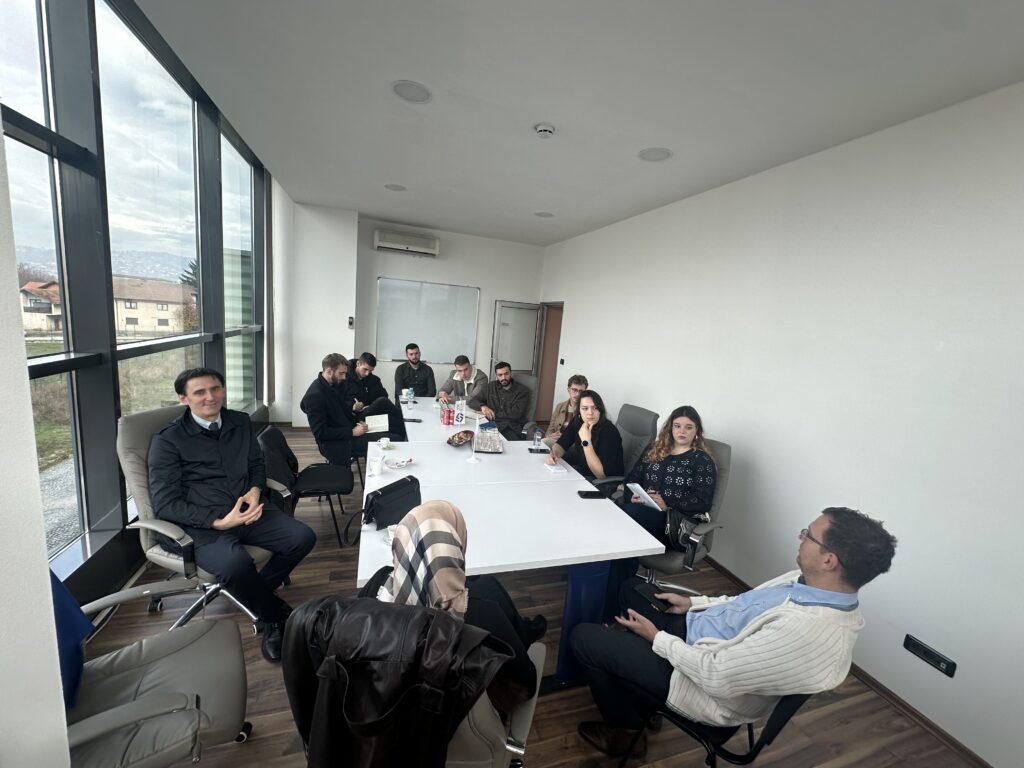
The Faculty of Traffic and Communications of the University of Sarajevo extends sincere gratitude to UNIT GROUP, its management and employees for their warm hospitality, the time set aside and their willingness to openly share with our students their knowledge, experience and challenges from daily business operations.
We particularly appreciate the opportunity they gave students to view transport from the perspective of experts who make decisions every day, resolve unforeseen situations and connect different participants in the supply chain.
We also thank GS1 Bosnia and Herzegovina for its partnership, initiative and support in implementing a project that enables students to gain valuable practical experience during their studies.
Cooperation between the academic community and industry is one of the key preconditions for educating future experts who will be ready to respond to the real challenges of contemporary transport and logistics.
And it is precisely through encounters like these that textbook knowledge gains its true value – in practice.