NATO in Bosnia and Herzegovina – Security challenges, citizens' trust and the impact of disinformation
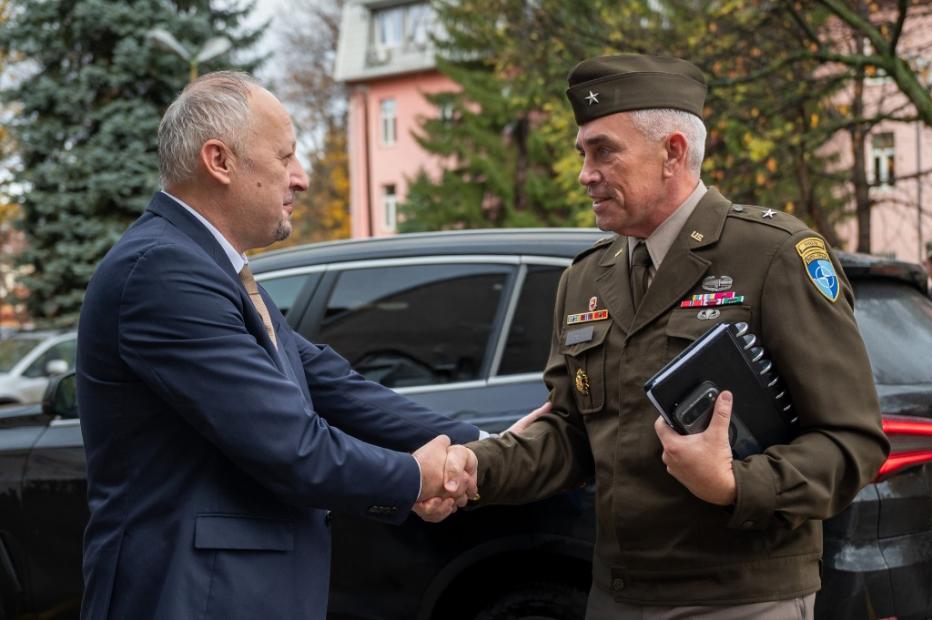


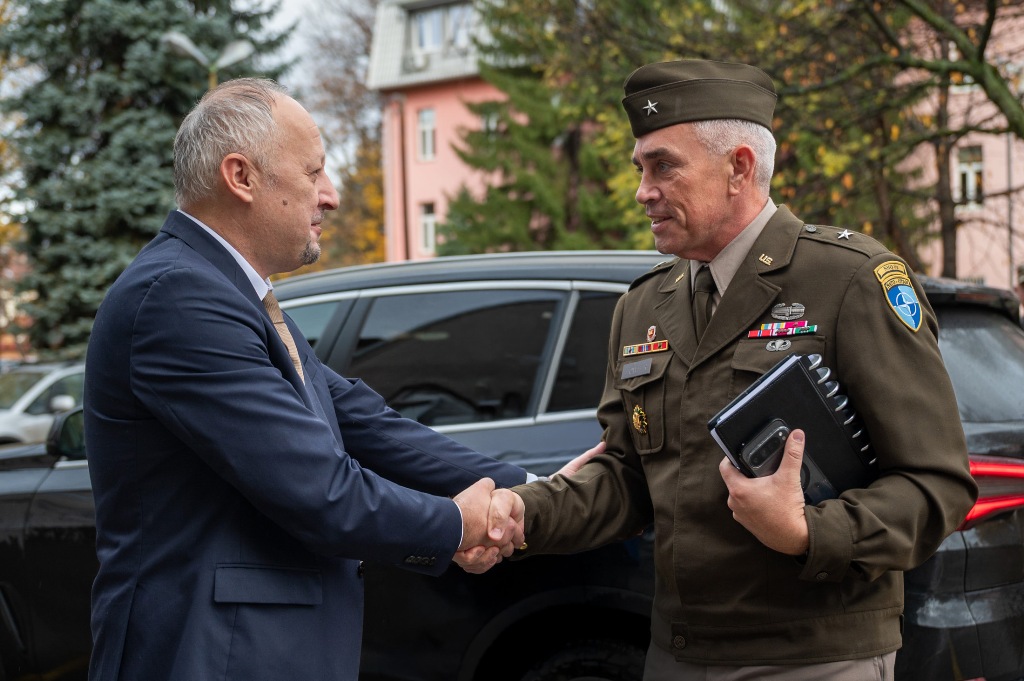
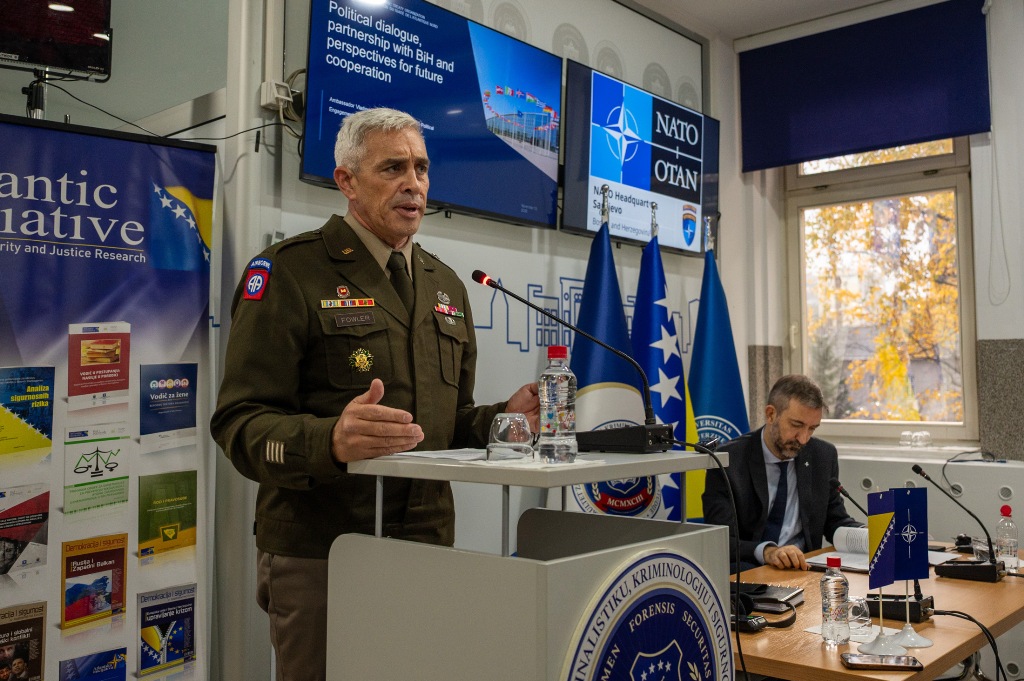
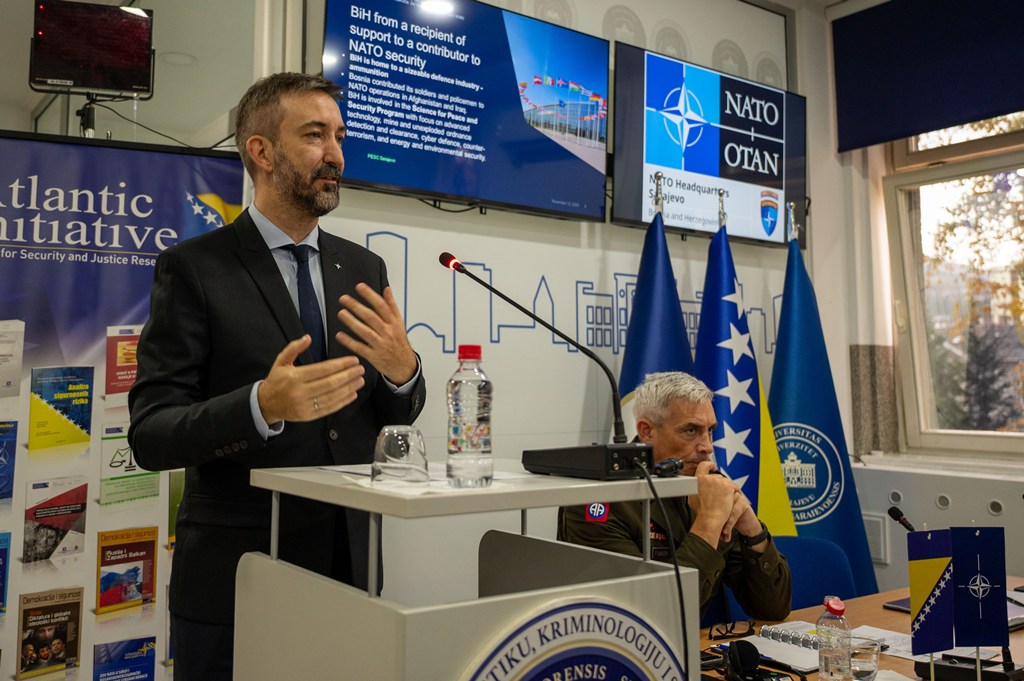
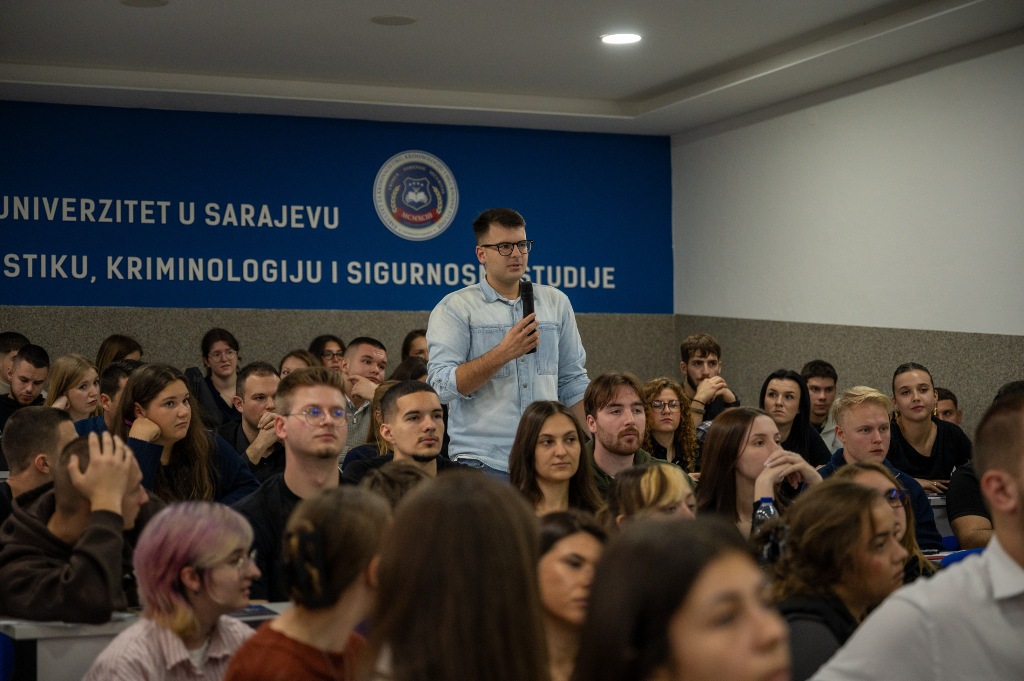
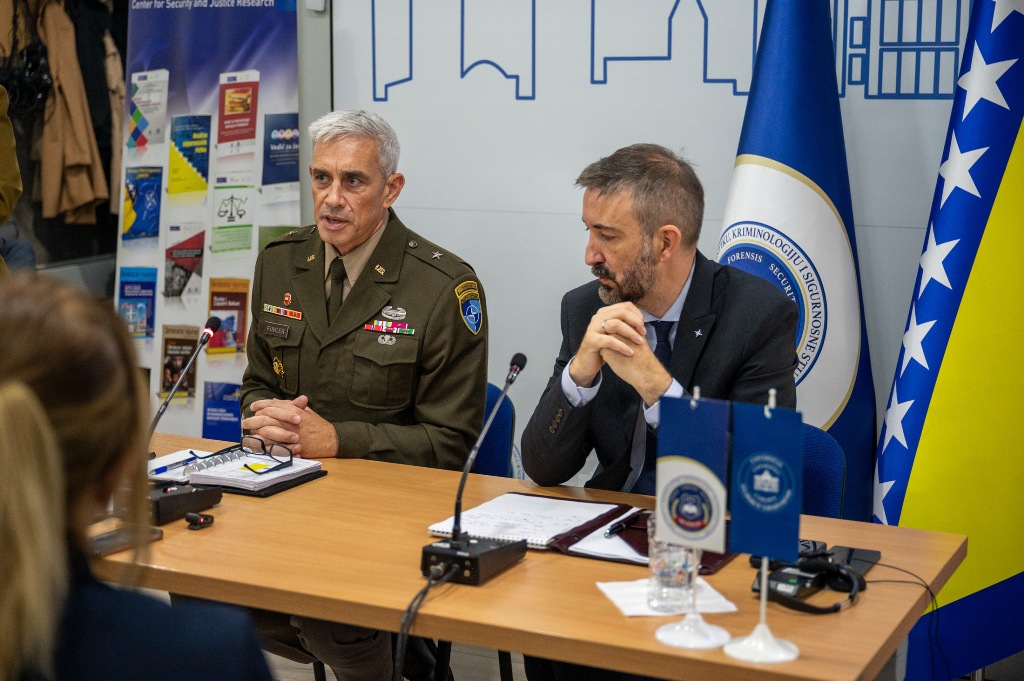
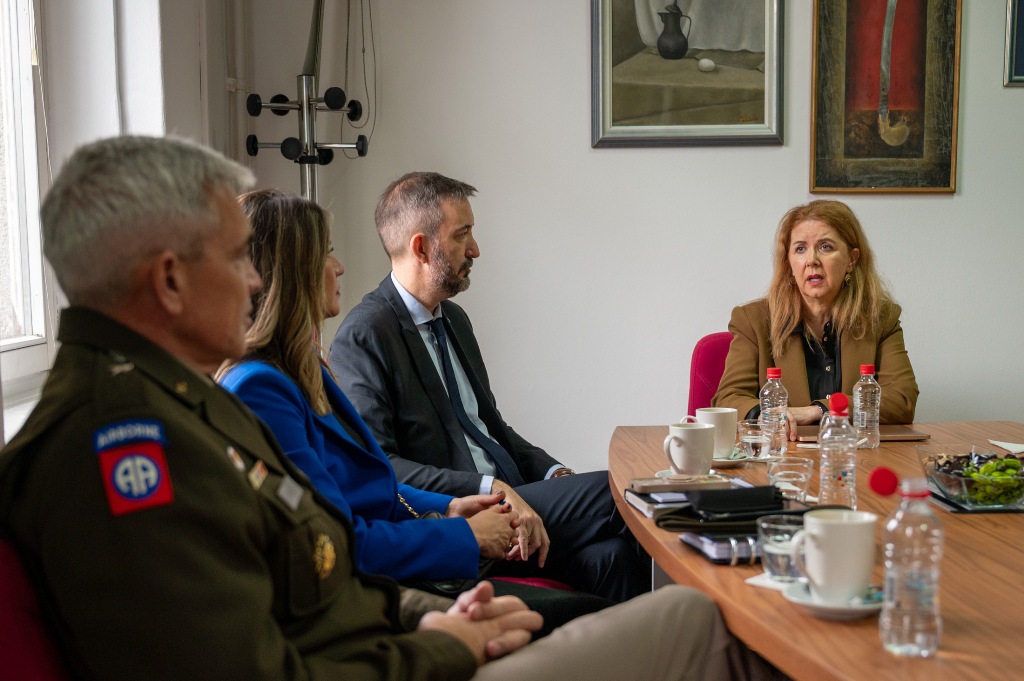
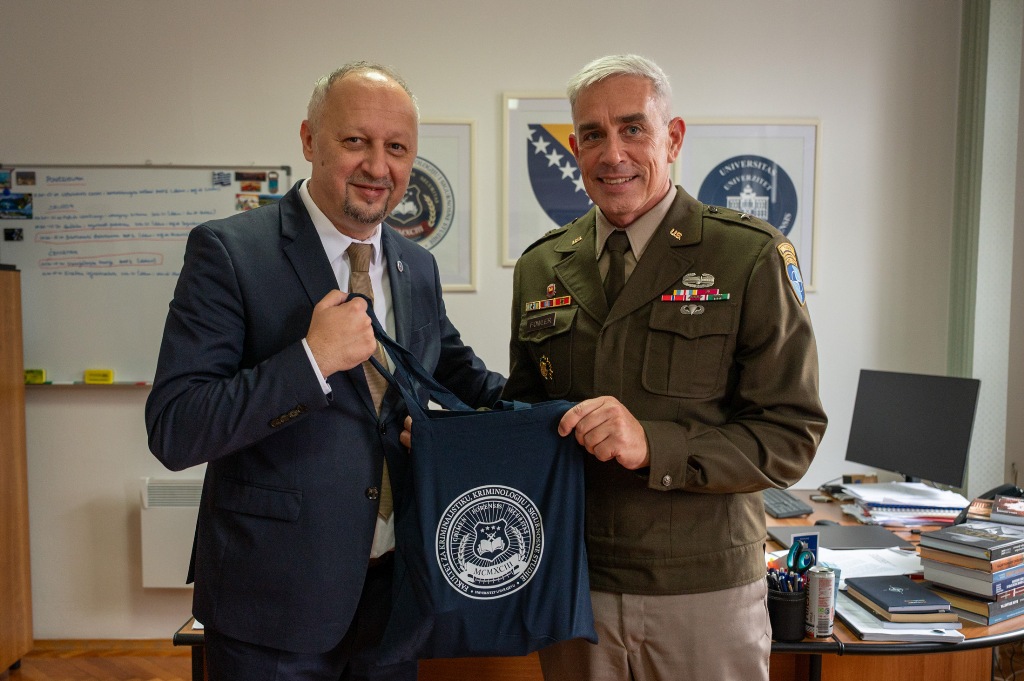
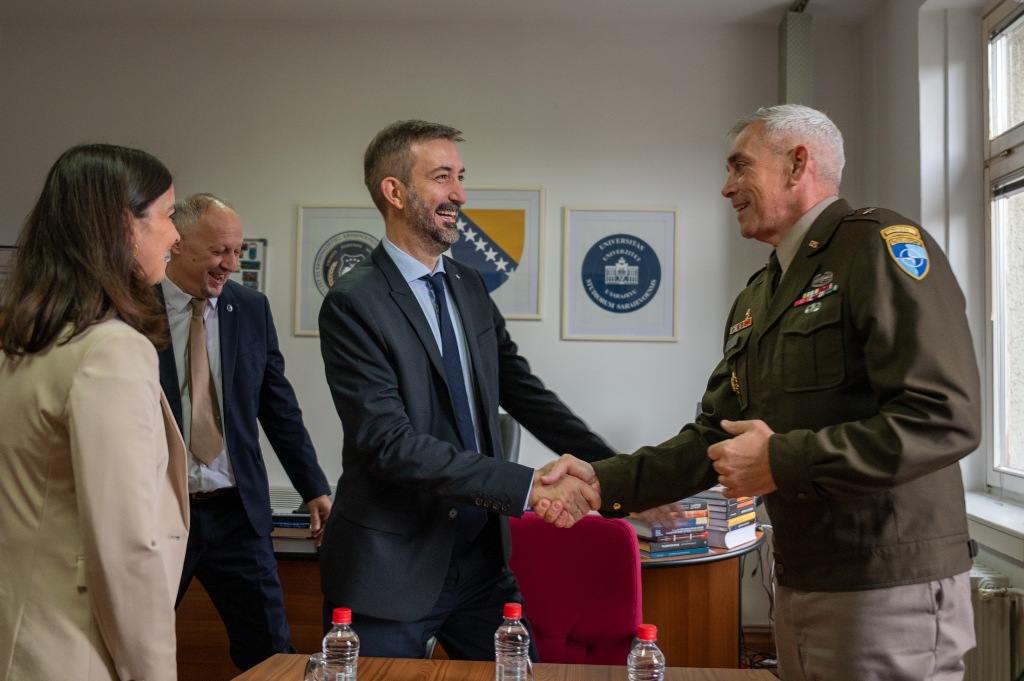
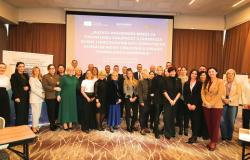
The Commander of NATO Headquarters Sarajevo, Brigadier General James Fowler, and Ambassador Vladimir Vučinić, head of NATO's Political Engagement Support Cell (PESC) in Bosnia and Herzegovina, visited the University of Sarajevo – Faculty of Criminalistics, Criminology and Security Studies on Friday, 13 November 2026, and on that occasion a conference was held, organized by our Faculty, the Atlantic Initiative and NATO Headquarters Sarajevo, dedicated to the role of the NATO alliance in Bosnia and Herzegovina, contemporary security challenges, the perception of security and the impact of disinformation, with the aim of student dialogue on security and cooperation in Bosnia and Herzegovina, with the active participation of students of the Faculty of Criminalistics, Criminology and Security Studies and the Faculty of Political Sciences.
In his introductory address, the Dean of the Faculty, Prof. Dr. Jasmin Ahić emphasized that since its founding the Faculty of Criminalistics, Criminology and Security Studies has recognized that contemporary security is not exclusively a matter of the action of state institutions and operational structures, but also an area in which the academic community has an exceptionally important role. Education, scientific research work, the exchange of knowledge and the development of professional competencies represent indispensable preconditions for building a stable, democratic and secure society. "In that context, the long-standing cooperation of our Faculty with NATO Headquarters Sarajevo is of particular importance. The cooperation so far, reflected in numerous activities, visits, conferences, public forums and round tables that we have jointly organized, confirms that there is a common understanding of the importance of connecting academic knowledge and practical security experience, as well as of the need for open dialogue on contemporary security challenges," Dean Ahić emphasized.
The Commander of NATO Headquarters Sarajevo, Brigadier General James Fowler, emphasized the importance of closer integration with NATO and European institutions in creating opportunities for greater security and prosperity: "Closer integration with NATO, greater connectedness with the European Union and stronger integration into Western institutions create an environment for a stable state. That provides an opportunity to improve security in this country, and all of this together opens up opportunities for prosperity."
In his address to the students, Ambassador Vučinić emphasized the importance of dialogue and the role of young people in shaping the country's future: "Through dialogue we can ensure a stable society in which diversity is respected and in which young people have the opportunity to express their opinion. You are the future of this country. You deserve a stable, secure and prosperous country, in which you will have opportunities for employment and conditions for starting a family."
Prof. Dr. Edina Bećirević in her presentation "The geopolitical context of Russia–NATO relations and the position of Bosnia and Herzegovina and the Western Balkans in contemporary security circumstances," spoke about what a guarantee of collective defense would mean for Bosnia and Herzegovina and why its security is also important to NATO itself. She warned that Moscow, even without a military presence in our country, can exert pressure through domestic political allies who have the power to block the decisions of state institutions. She emphasized that Bosnia and Herzegovina is key to the security of the Western Balkans, because a serious crisis in it would spill over to its neighbors, and the stability of the entire region is of immediate importance for European security.
Dr. Majda Halilović, in her address on the topic "Emotions, the feeling of security and trust in NATO," spoke about how citizens experience security, what shapes their attitudes and in what way emotions and experiences influence their relationship toward security institutions, based on research by the Atlantic Initiative, while Dr. Nejra Veljan, within the topic "Pro-Russian disinformation, security narratives and the perception of NATO in Bosnia and Herzegovina," presented the results of research on disinformation, the way public opinion is shaped and the impact of information campaigns on trust in institutions.
The conference concluded with a special round table within which General Fowler and Ambassador Vučinić talked with students of the Faculty of Criminalistics, Criminology and Security Studies and the Faculty of Political Sciences about their expectations of NATO and proposals for improving cooperation with young people.